True commercial refrigeration equipment service

True Commercial Refrigeration Repair & Service

True commercial refrigerators appear in several operating formats, and each format puts refrigeration performance into a different working context. A solid-door reach-in supports enclosed vertical storage. An undercounter cabinet places refrigerated storage below the work surface. A preparation refrigerator coordinates a pan area, lid, cutting board and lower cabinet. A glass-door merchandiser adds product visibility, door glazing, lighting and an illuminated sign to the refrigerated enclosure. CooperFix starts by identifying the exact True model and how that unit is used.

Professional diagnosis keeps True cabinet functions, airflow and refrigeration measurements connected. The technician records the full model and serial number, temperature duty, voltage, refrigerant label, door or drawer layout, shelves or pans, controller and mechanical access before selecting tests. Door sealing, fans, coils, drainage, electrical operation and circuit behaviour are evaluated as applicable. Recommendations follow measurements from the installed unit rather than assumptions about another True family.

Request True Service
Review True Equipment

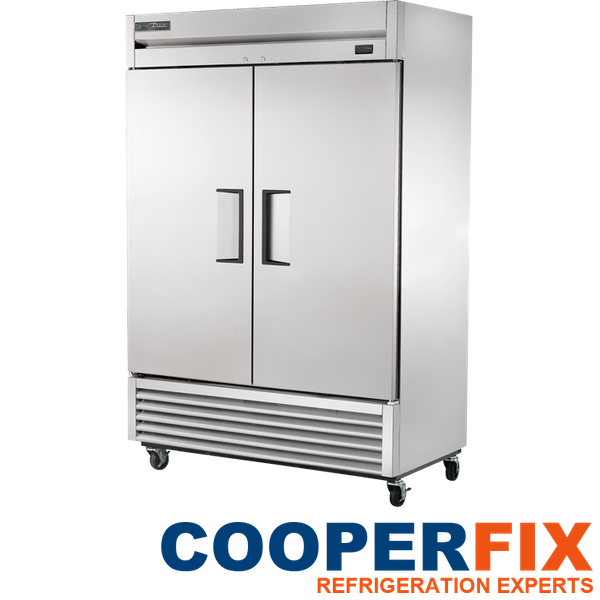
True T-49-HC two-door reach-in refrigerator
True T-49-HC solid-door reach-in refrigerator.

Exact model confirmed
The nameplate and cabinet format establish which True setup is being assessed.

Operating zones kept distinct
Storage, preparation-pan and display findings remain attached to the area actually measured.

Recommendations tied to measurements
Recommendations identify the observed condition, the cause supported by testing and the defined professional work.

Start with the True cabinet’s storage or prep role

Identify the True cabinet format and operating change

Tell CooperFix which True cabinet format is affected—reach-in, undercounter, preparation station or glass-door merchandiser—and summarize the operational change. Add a contact name, telephone and email, plus nameplate information only when staff can read it without opening or moving the unit. The technician confirms the installed setup and selects the applicable tests.

Describe the True Cabinet in Service

Describe the affected True equipment and the observed change. CooperFix confirms model details and determines the appropriate professional tests.

    Please prove you are human by selecting the plane.

    CooperFix services commercial refrigeration equipment only.

    Four commercial formats with different operating demands

    Select tests for the True reach-in, undercounter, prep, or merchandiser role

    The selected official products illustrate how cabinet architecture changes the service map. T-49-HC is a tall solid-door reach-in. TUC-48-HC is an undercounter refrigerator. TSSU-48-12-HC combines an accessible pan section with refrigerated lower storage. GDM-49-HC~TSL01 is a glass-door merchandiser with lighting and a sign panel. CooperFix verifies the exact model before applying any model-specific feature, operating range or access expectation.

    T-49-HC solid-door reach-in refrigerator

    The current official page identifies T-49-HC as a two-door reach-in refrigerator with six adjustable shelves and a bottom-mounted self-contained refrigeration system. Its published cabinet range is 33–38°F / 0.5–3.3°C, and the current model uses R290. The tall enclosure makes door closure, gasket contact, shelf loading and vertical air distribution relevant to performance. CooperFix confirms the installed model, observes both door openings, evaluates airflow through the cabinet and correlates those observations with control and refrigeration measurements.

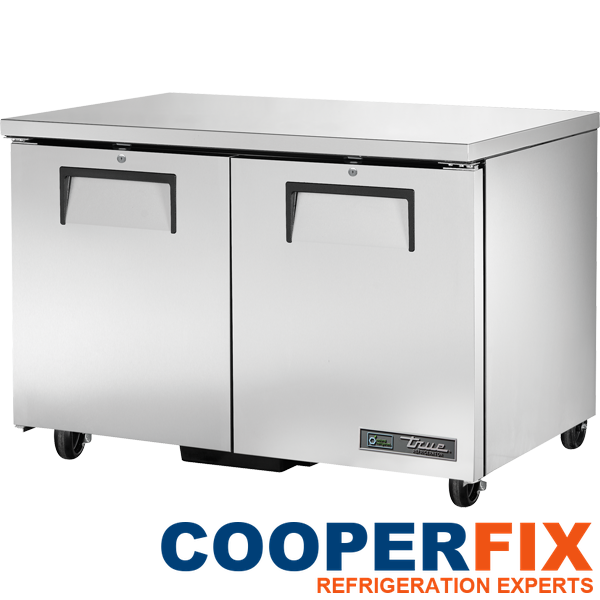
    TUC-48-HC undercounter refrigerator

    TUC-48-HC is presented as a two-door undercounter refrigerator with four adjustable shelves, guided airflow and rear slide-out access to the condensing unit. The current official page publishes R290 and a 33–38°F / 0.5–3.3°C cabinet range. Counter-height storage creates a different door, loading and access pattern from a reach-in. CooperFix checks the confirmed cabinet, closure surfaces, airflow route, controller and mechanical section without assuming that every True undercounter shares this exact service arrangement.

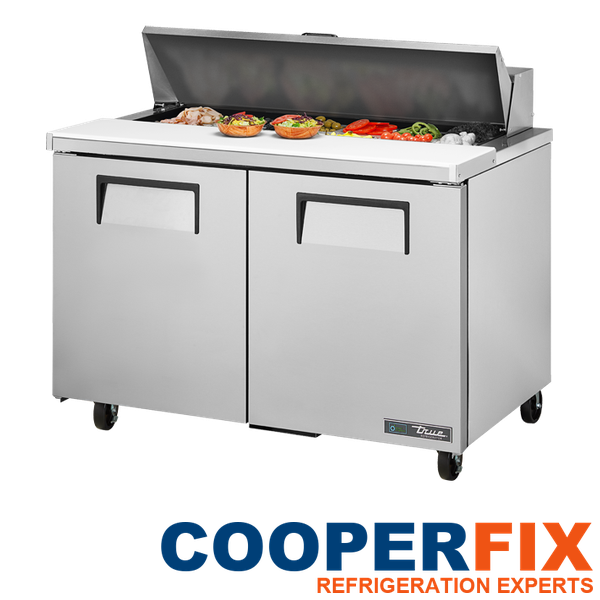
    TSSU-48-12-HC preparation refrigerator

    The TSSU-48-12-HC page describes a two-door sandwich and salad preparation unit with four shelves, twelve 1/6-size top pans, a removable cutting board and an insulated removable lid. Forced air is directed to the pan area, and the page publishes a 33–41°F / 0.5–5°C range for that area with R290. CooperFix treats the pan section and lower cabinet as related operating zones while recording their conditions separately. Pan arrangement, lid use, airflow, doors and cabinet load are considered alongside technical measurements.

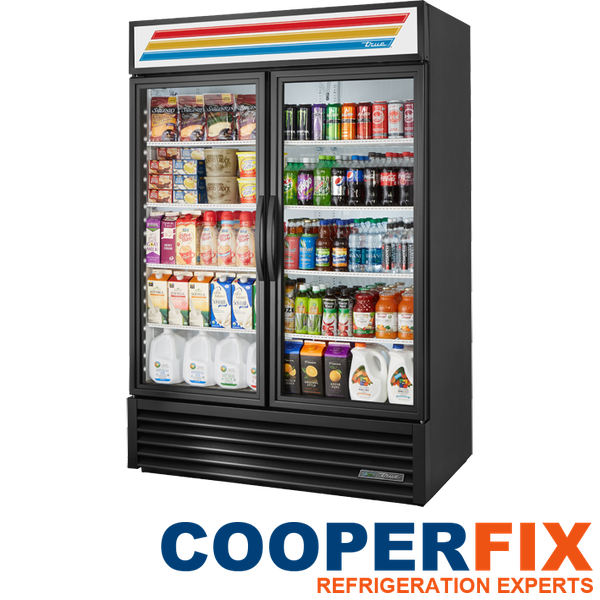
    GDM-49-HC~TSL01 glass-door merchandiser refrigerator

    The GDM-49-HC~TSL01 page identifies a two-door merchandiser with eight adjustable shelves, insulated glass swing doors, LED interior lighting, an illuminated sign panel and a bottom-mounted self-contained refrigeration system. It publishes R290 and a 33–38°F / 0.5–3.3°C range. CooperFix distinguishes presentation functions from refrigeration functions: lighting or a sign concern does not by itself establish a cooling fault, while glass-door condition, closure and cabinet airflow remain relevant to measured performance.

    True TUC-48-HC two-door undercounter refrigerator
    True TUC-48-HC commercial undercounter refrigerator.
    True TSSU-48-12-HC sandwich and salad preparation refrigerator
    True TSSU-48-12-HC refrigerated preparation table.
    True GDM-49-HC TSL01 glass-door merchandiser refrigerator
    True GDM-49-HC~TSL01 glass-door merchandiser refrigerator.

    Similar temperatures do not make the cabinets interchangeable

    Trace airflow and enclosure performance by True cabinet format

    A reach-in distributes air through a tall storage volume. An undercounter uses a lower enclosure with a different access pattern. A preparation unit adds an exposed working zone above the lower cabinet. A merchandiser depends on clear presentation while its doors, shelves and lighting interact with the refrigerated space. These differences affect what the technician observes and where measurements are taken.

    CooperFix maps the air path, door or lid interfaces, shelf or pan arrangement, control response, evaporator condition, fan operation, drainage and mechanical access as applicable. Refrigeration-side temperatures, pressures and electrical readings are connected to that physical map. A reading or symptom from one True format is not transferred to another without measurements from the affected unit.

    The mechanical layout also changes the service sequence. The T-49-HC and GDM-49-HC~TSL01 use bottom-mounted self-contained systems, while the TUC-48-HC publishes rear slide-out condensing-unit access. The TSSU-48-12-HC directs forced air toward its pan area and combines that upper zone with lower storage. CooperFix notes the access arrangement before taking comparative readings, then keeps pan-area, cabinet, door and condensing-section test results attached to the applicable True model. An inaccessible service position is noted as a limitation, not inferred from another cabinet.

    Daily use provides context for professional measurements

    Note door traffic, stocking, and prep activity by cabinet

    Door-opening frequency, loading, pan replenishment, lid position, shelf arrangement, product clearance and surrounding airflow can affect the conditions a unit encounters. A preparation cabinet may change during active assembly periods. A merchandiser may experience repeated door openings while continuing to support visible stock. A reach-in or undercounter may recover differently after routine access. These observations help reproduce the report, but none alone proves a technical cause.

    CooperFix notes when the change appears, whether the unit recovers, which compartment is affected and what ordinary operating activity surrounds the event. Staff can describe what they observed and when it began. Safe access, measurement, technical interpretation and cause-finding remain the technician's responsibility.

    Keep every cabinet’s test results and approval separate

    Keep each True cabinet's findings, authorization, and close-out separate

    A business may use a reach-in for bulk storage, an undercounter near the work position, a preparation unit for active production and a merchandiser for customer-facing display. Similar finishes or controllers do not establish identical models, components or faults. CooperFix assigns a separate equipment entry to every unit included in the request.

    Each record carries the complete model, serial information when available, cabinet role, reported change, applicable temperatures, observations, readings and recommended work. Access planning can be coordinated across the group, while diagnosis remains unit-specific. A door-seal finding on one cabinet does not establish the condition of another, and a preparation-pan observation does not define the condition of a merchandiser.

    Close-out follows the same cabinet map. A TSSU record identifies whether the approved action concerned the pan area, lid, lower storage or a shared refrigeration function. A GDM record separates glass-door and lighting observations from measured cabinet performance. TUC rear-access findings remain with that undercounter, while T-49 reach-in results identify the applicable door and storage section. This detail allows several True units to share one service window without turning coordinated timing into a combined technical conclusion.

    From True model details to cabinet-specific measurements

    Reach-ins, prep tables, and merchandisers need different tests

    01 — Confirm the True setup

    The True assessment record captures the complete model suffix and available serial together with cabinet family, voltage, refrigerant label, controller, door or drawer layout, shelving or pans and any lit merchandising features. Current manufacturer literature is used only after it has been matched to the installed model.

    02 — Map the functional zones

    The technician identifies the refrigerated enclosure, doors, gaskets, hinges, shelves or pans, air path, fans, evaporator, drainage, controller, sensors, electrical components and condensing section as applicable. On a preparation unit, the top pan area and lower storage are noted separately. On a merchandiser, presentation lighting and cooling performance remain distinct functions.

    03 — Measure the reported condition

    Checks can include cabinet and product-zone temperatures where appropriate, controller input and output, door closure, gasket contact, airflow, fan and coil condition, drainage, electrical operation, compressor behaviour and refrigerant-side temperatures or pressures. The confirmed model, reported condition and safe access determine the exact sequence.

    04 — Explain the recommended work

    CooperFix connects each recommendation to an observed condition, a measured result and an affected function. The proposed repair, related observations, optional planned care and any further assessment are identified separately. The business can then approve a defined action for the exact True unit rather than an open-ended list based on the brand name.


    Repair follows confirmed cabinet and refrigeration test results

    Authorize work only for the affected True cabinet function

    Depending on findings, professional work may involve controls, sensors, wiring, contactors, fan motors, blades, coils, drainage, lighting circuits, compressor functions, valves, piping, leak assessment or refrigerant-circuit work. The exact model and installed refrigerant determine which procedures and parts are applicable. This capability range does not predict that every item is present or requires work.

    After approved work, CooperFix reviews the functions included in the authorization and notes the observed response. Addressing a lighting circuit does not establish a cooling correction. A refrigeration-system repair does not automatically include unrelated cabinet hardware. Close-out remains tied to the test results and approved action.

    For a TSSU preparation refrigerator, verification considers the area that prompted the request. A reported change at the ingredient pans should not be closed solely because the lower cabinet has cooled. The technician relates the relevant readings to the lid position, pan arrangement and operating conditions that were observed. For a T-49 reach-in, the comparable question concerns the enclosed storage space and its recovery after access. These are different uses of refrigeration, even when both cabinets are working beside each other.

    A GDM merchandiser may also require the business to distinguish an operational concern from a presentation concern. A dark lamp, a door that does not close as expected and a recurring temperature rise are separate observations. CooperFix can investigate their relationship where testing supports one, but does not assume that one repair resolves all three. The completed-work explanation identifies the actual function checked and the condition under which it was verified.

    Active True correction and planned cabinet care are separate

    Link each True recommendation to the measured cabinet condition

    Corrective work addresses the cause of the reported operating change that current testing supports. A separate observation may justify planned commercial refrigeration maintenance, but it does not automatically enlarge the authorized repair. CooperFix identifies the True model, affected function, measurement and purpose behind every recommendation, keeping required and optional work distinct.

    This boundary prevents a warm cabinet from becoming an unsupported component list. A door gap does not alone prove a refrigeration-circuit fault. Frost does not alone identify its cause. An unusual sound does not automatically establish compressor failure. A display-light issue does not determine cabinet temperature. Decisions follow the complete assessment rather than a single symptom.

    Maintenance planning also accounts for service access. A TUC undercounter unit may operate in a restricted position, while a reach-in or merchandiser presents a different route to its mechanical components. The technician identifies the access needed before describing a task as routine. Stocking activity, surrounding equipment and a business’s normal operating window can affect coordination without determining the technical cause of a fault. Agreed maintenance should address the accessible needs of the installed True model, with any outstanding repair or further diagnostic requirement stated separately.

    Keep cabinet format, controls, and readings in the True record

    Compare each True unit with its own service history

    CooperFix retains the full model, serial information when available, cabinet role, nameplate data, installed refrigerant, controller, door or drawer arrangement, shelves or pans, reported change, measurements, approved work and relevant post-work observations. Preparation records distinguish the pan zone from lower storage. Merchandiser records keep door, lighting and refrigeration observations clearly separated.

    Earlier information supports comparison but does not prove a present cause. A past gasket finding cannot establish the current condition, and readings from a similar True model cannot replace measurements from the affected cabinet. Consistent unit-level service notes improve testing continuity, parts research and decision clarity while keeping each new recommendation grounded in current test results.

    Which True reach-in, undercounter, prep, and merchandiser cabinets can CooperFix assess?

    CooperFix services confirmed True reach-in, undercounter, preparation and glass-door merchandiser refrigerators, along with other True commercial refrigeration equipment when exact model details are confirmed. The installed setup, reported condition and current measurements determine the applicable assessment and recommended work.

    How does the True model identify cabinet format, airflow, and control layout?

    The model distinguishes cabinet role, door or drawer arrangement, shelf or pan layout, temperature duty, refrigerant, controller and mechanical access. CooperFix uses the complete model details to select relevant professional tests and keep every finding attached to the correct unit.

    How is a True preparation refrigerator assessed differently from a reach-in?

    A preparation model includes an accessible pan area, lid and work surface above refrigerated storage, while a reach-in uses an enclosed vertical cabinet. CooperFix notes the confirmed zones, airflow and operating pattern separately instead of applying one cabinet's expectations to the other.

    What does CooperFix check on a True glass-door merchandiser?

    The assessment can include model details, glass doors, gaskets, hinges, shelves, airflow, fans, coils, controls, lighting, electrical operation and refrigeration performance. Presentation functions and measured cooling performance remain distinct so the recommendation addresses the cause supported by current testing.

    How are several True cabinets kept separate during one coordinated visit?

    CooperFix assigns each True cabinet its own equipment entry with model, cabinet role, reported condition, readings, approved work and close-out test results. The visit may share one schedule, but a finding from a reach-in, undercounter, preparation unit or merchandiser is not assigned to another cabinet without direct measurements.

    Which True cabinet and operating-role details help begin service?

    Provide contact details, identify the cabinet format when known and describe what changed in ordinary terms. Include model or serial information only when already available from a normal label or service file. CooperFix confirms the unit, performs the applicable professional tests and explains the recommendation supported by those measurements.

    Continue with the affected True cabinet

    Name the True format and the storage or prep function that changed

    Share contact information and describe the True unit and what you observed. A cabinet type, model or serial number can be included when already available. CooperFix confirms the setup and plans the applicable assessment; no technical self-diagnosis is required.

    Submit True Cabinet and Operating-Role Details

    Tell CooperFix which True unit is affected and what changed. The technician verifies the model, operating zones and appropriate test sequence.

      Please prove you are human by selecting the house.

      CooperFix services commercial refrigeration equipment only.

      True service based on cabinet-specific findings

      Restore reliable cooling for the affected True cabinet

      CooperFix confirms the model, maps the cabinet functions and explains the work confirmed by current measurements.

      Request True Service
      Review Equipment Coverage