
Commercial freezer repair in Angus
Softening stock in a reach-in, an undercounter unit drifting above setting, or a display case frosting faster than usual means a commercial freezer needs attention. Describe the change and its effect on daily operations, and CooperFix will arrange an on-site assessment.
An Angus commercial freezer request should distinguish a rising cabinet temperature from a local frost, door or drawer problem. Record the controller message and the location of any soft product, frost or water while leaving panels and guards closed.
Tell us about the commercial freezer that needs attention
Start with the Angus street address and the on-site contact. Name each affected freezer, whether reach-in, undercounter, display case or storage cabinet, and what staff noticed. If several units are involved, rank them by how much frozen stock or sales each puts at risk.
- Cabinet temperature trend, product risk, ice pattern, controller message, fan operation and post-defrost response
- Freezer nameplate details, when readable without moving the cabinet
- Cabinet location and where any separate condensing unit sits
Request commercial freezer service in Angus
Provide a phone number and email address where CooperFix can confirm the equipment, site and access details.
What happens after you contact CooperFix
Each freezer visit begins with the notes your staff gathered, then moves to the cabinet and any condensing equipment connected to it.
Describe what changed
Without opening anything, describe the freezer’s behaviour: a rising display reading, frost building on shelves or product, water under the unit, louder fans or a compressor that never stops. Before the Angus commercial freezer visit, mention any controller or breaker reset and the result.
Confirm the address and access
Give the complete Angus street address, including any unit number, and who will greet the technician. If the condensing unit is mounted on the roof or in a locked mechanical room, say so, and mention whether a landlord or property manager must approve entry.
Review the diagnosis and next step
After checking the freezer and connected equipment, you hear what failed, what was done, which parts or options remain and whether a return trip is needed. Advice rests on the confirmed cause, not the first symptom.
Commercial freezer equipment we service in Angus
A warm cabinet, frosted display lid and tripping compressor can trace back to different parts. Tell us which freezer is affected, where it stands and where any condensing unit is mounted. Layout, model details and operating pattern shape the inspection plan.
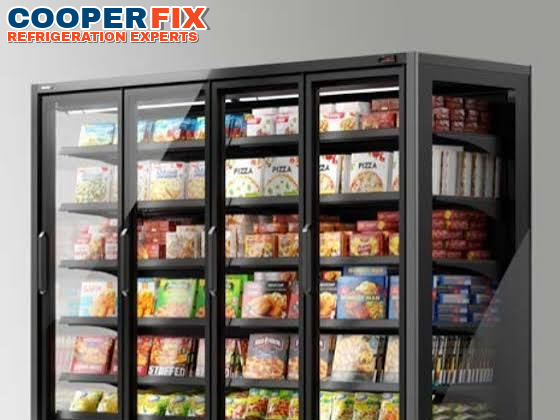
Upright commercial freezer cabinets
Give the upright freezer’s target and current readings and identify any compartment that differs from the others. Note loading, door use, fan sound and visible frost over time. Include how long the cabinet remained closed before each comparison reading was taken. These details let the technician interpret the temperature history without treating one warm reading as the diagnosis.
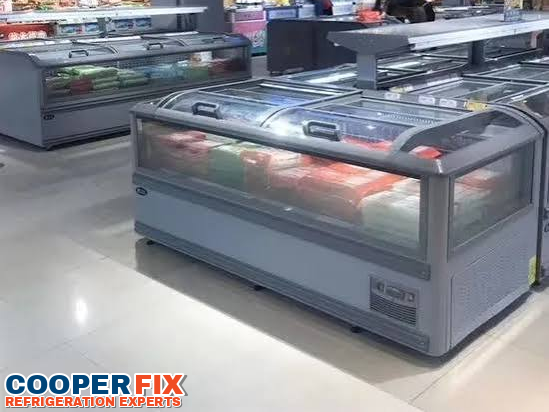
Horizontal frozen-food display equipment
Identify the affected well or display section and describe its temperature trend, frost, water and neighbouring compartments. Keep product below marked load lines and leave accessible refrigeration areas unobstructed. Staff should not remove a panel or disturb the freezer to gather more information.
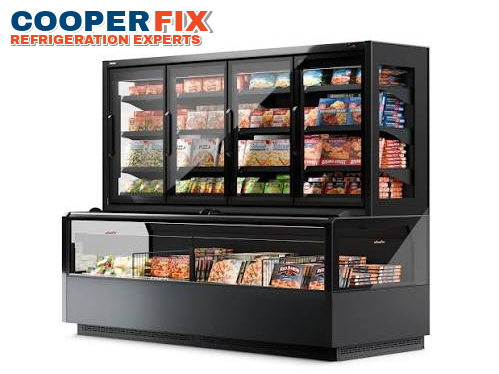
Glass-front frozen-food display cabinets
State which glass-front cabinet or door section is involved and record its reading, frost pattern, alarm and run-time change. Similar symptoms in another cabinet may have a different cause, so list each unit separately and let on-site testing establish the fault.
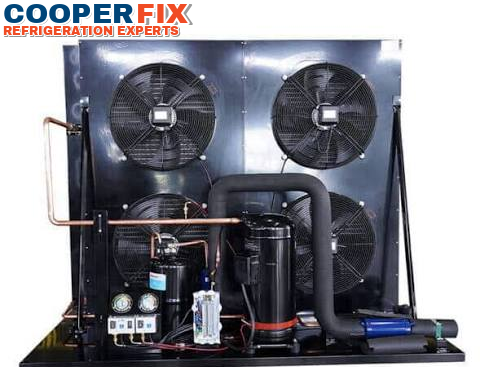
Condensing equipment serving commercial freezers
Describe the freezer cabinet, recent defrost behaviour and the location of its connected condensing equipment. Note abnormal sounds or cycling from a normal observation point. The technician needs access to the complete refrigeration system before explaining the cause and available repair options.
How the technician follows the commercial freezer beyond the first symptom
A soft carton in a display freezer does not always mean the fault starts there. The technician first confirms how the freezer is supplied and connected, then traces airflow, defrost controls, wiring, the drain line and refrigeration circuit.
Work begins with the temperature log, alarm codes and staff notes. At the freezer, the technician looks at evaporator fans, frost buildup, defrost heaters and timing, drain flow, sensors and lid or door closure. Checks extend to the condenser, compressor, wiring and refrigerant circuit when findings point there.
Looking at the whole freezer system keeps one symptom from driving the recommendation. You learn what was wrong, what was done, whether parts or another trip are needed and which readings staff should watch.
Island and chest-style display freezers hold cold air like a basin, with the refrigeration coil below or around the product. Loading above the marked line or blocking air openings lets warm air in, so the technician checks loading and airflow before assessing the refrigeration system.
Glass-front freezer merchandisers often have anti-condensation circuits in the frame and glass. If one of these stops working, moisture or frost can form at the front even though the cabinet temperature is normal, and the technician distinguishes this from a cooling fault.
Arrange access to the complete system
Staff should note readings, alarms and behaviour changes, leaving covers and measurements to the technician. Before the visit, clear a path to the freezer, its disconnect and any remote condensing unit, and name who hears the results.
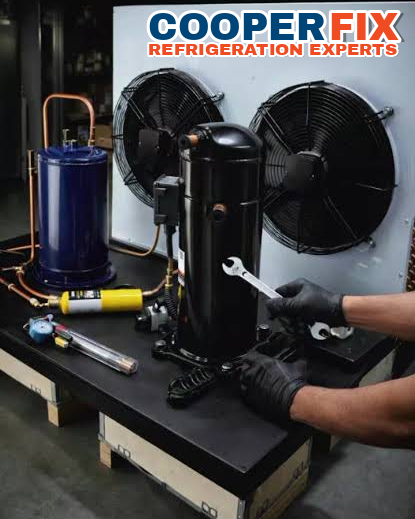
Common commercial freezer faults and how repair recommendations are made
Which repair makes sense depends on the freezer’s age and condition, the duty it performs and what testing actually reveals.
Temperature and recovery problems
A freezer that runs but does not reach setpoint may have an airflow, control, defrost, electrical or refrigeration problem. Provide the reading trend and operating cycle, including any change after a scheduled defrost or ordinary restocking period. The technician compares those observations with measurements from the installed cabinet before recommending work.
Frost, defrost and drainage
Record where frost or water appears, when it returns and whether it follows a scheduled defrost. Heaters, sensors, fans, controls and the drain path can create related symptoms. Leave panels closed so the complete defrost sequence can be tested safely.
Electrical and control faults
Preserve controller alarms and report any stopped fan or tripped protective device. Do not keep resetting a breaker or safety control. The reset history and the freezer’s response help the technician plan electrical checks without repeatedly forcing the equipment to restart.
Recurring faults and replacement planning
Share the earlier service date, work completed and length of normal operation, together with the freezer’s present condition and duty. Current testing determines whether the right next step is a repair, a monitoring period or a discussion about replacement.
A freezer that runs constantly but never reaches its set point may have a restricted condenser, a weak compressor, a refrigerant problem or a blocked evaporator. Measurements taken during operation help separate these causes so that the repair addresses the fault actually found.
Information Angus businesses should provide before a refrigeration visit
Freezers in Angus serve many kinds of businesses, so a request works best when it describes the real site rather than a typical one. Name the type of property, which freezer is affected and what the problem is doing to the operation, whether that means held stock, display sales or preparation. Add what staff noticed and who can arrange entry.
Compare cabinet zones
Report whether the upper, lower, door-side or rear area changed first and whether other sections remain frozen. A zone-by-zone description is more useful than a single estimate for the whole cabinet.
Describe frost placement
State whether frost is on product, a shelf, the door opening or a visible interior surface. Do not chip frost or remove an evaporator cover to obtain a closer view.
Preserve the alarm sequence
Write down the exact alarm text and time before acknowledging it if site procedures allow. If someone already cleared or reset the display, report that action and what the freezer did next.
Report door and loading conditions
Note a door that does not close evenly or stock that may obstruct the opening. Include recent loading activity without treating it as proof of the fault.
Record observations without opening the equipment
Note the freezer’s displayed reading beside any separate thermometer staff normally check, and the time it was taken. Mention whether the cabinet was just restocked or opened often in the last hour. A nameplate photo helps, provided nobody has to shift the cabinet or take off a cover.
If a breaker or safety control trips, do not keep resetting it. Tell CooperFix how many resets were tried and how the freezer behaved each time. That record lets the technician plan wiring and control tests without cycling a device that stopped the unit.
If the freezer has a temperature alarm, record when it sounded and whether it cleared by itself. An alarm that clears after a defrost cycle tells the technician something different from one that stays active while the cabinet continues to warm.
Use your food-safety procedures while service is being arranged
A repair visit does not replace the business’s own food-safety procedures, so keep following them. Whoever is responsible for food safety decides when frozen stock moves elsewhere. Meanwhile, limit how often the freezer is opened and keep cartons clear of the evaporator fan and return-air openings.
When meltwater on the floor, ice buildup or a wiring concern creates a hazard, keep people away. Explain it when you call so safe access can be planned before the technician starts.
Arrange access to every part of the affected refrigeration system
Provide the full Angus address and unit number, the freezer’s location, any known remote equipment, parking or loading directions and the contact who can open restricted or rooftop areas. Distinguish the affected cabinet from similar units and arrange safe access to its service side and electrical disconnect.
Where safe, clear loose cartons and supplies from around the freezer, but leave fixed items in place. Have the on-site contact ready to point out the right cabinet, describe what staff saw and review findings with the technician.
Confirm what was found, what was repaired and what still needs attention
Before the technician leaves, ask what caused the problem, what was repaired and what work is still recommended, including any part order or return visit. Confirm that the freezer is operating, which readings staff should monitor and where the report will go. Have any temporary measure identified clearly.
Keep data-plate details, controller messages, temperature logs and service notes under the freezer’s site identifier. If trouble returns, provide the prior visit date, completed work and the new change. During the next normal operating cycle, record cabinet recovery, alarm status, visible frost and door closure.
What to know before requesting commercial freezer service
These answers cover what to tell CooperFix and how a freezer visit is organized. Repairs are confirmed only once the technician examines the equipment.
Can an Angus business request service for a commercial freezer?
Angus businesses can request commercial freezer repair from CooperFix. State whether the problem involves a reach-in, undercounter cabinet, frozen display or other low-temperature unit, and provide its readings, alarm and product risk. Inspection of the installed freezer comes before repair confirmation.
Which details help when frozen product starts softening in a freezer cabinet?
Record freezer readings, product condition, frost location, alarms, fan behaviour, defrost timing and recovery. Include when softening began, recent loading or door use and whether one section or the entire cabinet is affected. Continue the business’s established food-safety procedures while arranging service.
Does heavy freezer frost point to one failed part?
Not by itself. Ice buildup may come from airflow, a lid or door left open, defrost timing, a blocked drain, controls or refrigeration. Note where it forms, photograph it when safe and keep all covers shut.
Which site details does the technician need before visiting an Angus freezer?
Share the street address and unit number, a contact person, site hours and exactly where the freezer stands. Flag locked rooms, rooftop condensing units, parking or loading limits, security check-in and any property manager who must approve entry.
Can several freezers at one site share a request?
Yes. Describe each freezer and where it is located, then say which one puts the most frozen stock, display sales or production at risk. One request lets CooperFix plan the whole visit, while the symptoms of each unit are still recorded and assessed separately.
Which photos and model details make freezer service easier to plan?
Photos of the nameplate, the controller screen and the freezer as a whole are useful if they can be taken without shifting the cabinet or removing a cover. They help the technician prepare, yet they cannot confirm which part has failed.
What past repair records matter when a freezer starts acting up again?
Share when the freezer was last serviced, what was done and how long it ran normally afterward. Describe the new symptom and when it was noticed. Past records guide a fresh diagnosis but do not prove the old fault is back.
Request commercial freezer service in Angus
Send the Angus business address, the freezer involved, its current reading or alarm, the frozen stock at risk and an access contact. For urgent problems, phone (647) 483-3777 with that information at hand.
Commercial Refrigeration Repair in Angus Commercial Freezer Repair service overview
Emergency calls are received and assessed 24/7. Availability and response depend on location, workload and the repair required.
Send your Angus service request
Describe the affected equipment and provide the Angus service address.