
Commercial refrigeration repair in Angus
If a commercial cabinet, display case, preparation table, cooler, freezer or cold room in Angus is no longer holding temperature, describe the equipment and the present effect on the business. CooperFix arranges an on-site assessment of the installed refrigeration system involved.
For an Angus request, separate the symptom at each cabinet or cold room from anything staff noticed at connected equipment. Include the first abnormal reading, the time it appeared and the business activity that was interrupted so the installed system can be assessed from a clear starting point.

Tell us about the refrigeration system that needs attention
Provide the Angus service address, site contact, equipment type and every symptom staff can observe. List affected units separately, identify the greatest product or operational risk, and state when the condition began, the latest confirmed reading and whether loading, cleaning or door use preceded it.
- Temperature trend, controller message, moisture, frost, fan sound and cycling behaviour
- Brand, model and serial information visible without moving the equipment
- Unit-entry instructions plus the location of remote condensing equipment
Request commercial refrigeration service in Angus
Provide a phone number and email address where CooperFix can confirm the equipment, site and access details.
What happens after you contact CooperFix
Staff should explain how the condition first appeared and use the property’s own name or number for the affected equipment. The technician can then locate the cabinet, case or room and examine its relationship to the controls, condenser and other components involved in operation.
Describe what changed
Record temperatures, alarms, frost, water, sound and any reset already attempted, using only displays and surfaces staff normally access. Do not open electrical or refrigeration components, and stop resetting a breaker or safety device if it trips again.
Confirm the address and access
For the Angus visit, state who will meet the technician and where. List every key, escort or permission needed to reach rooftop equipment, locked rooms or shared service spaces, including the responsible person when entry depends on a landlord or another occupant.
Review the diagnosis and next step
The service note should state the diagnosis, any completed work, parts or follow-up still required and the recommended next step. That recommendation must be supported by the findings rather than chosen from the visible symptom alone.
Commercial refrigeration equipment serviced in Angus
Use the options below to identify whether the Angus request concerns a commercial fridge, a standalone commercial freezer or the refrigeration system connected to a walk-in freezer.
reach-in refrigerator, preparation table, undercounter fridge, beverage cooler or display case.
View service
frozen-storage equipmentCommercial freezer repair in Angusreach-in freezer, undercounter freezer, frozen display case or low-temperature storage cabinet.
View service
walk-in freezer equipmentWalk-in freezer repair in Angusrefrigeration system serving a freezer room, including the evaporator, condensing unit, controls, defrost functions and drainage connected to the refrigeration equipment.
View service
Commercial refrigeration equipment we service in Angus
Distinguish the affected cabinet, case or room by its site label and physical position. Supply model details and note any remote condenser or control connection shown in reliable records, together with the operating change staff observed. Those details provide a starting point for confirming how the components are arranged.
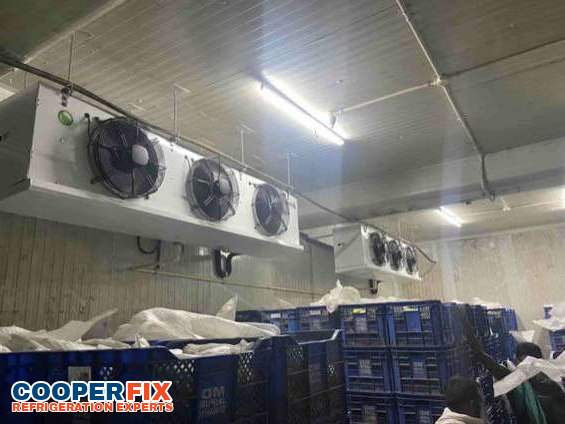
Walk-in coolers and freezers
For a walk-in cooler or freezer, record room temperatures, alarms, visible frost or water and the known equipment locations. Arrange access to the evaporator area and the condensing equipment serving the room so the complete refrigeration system can be assessed.
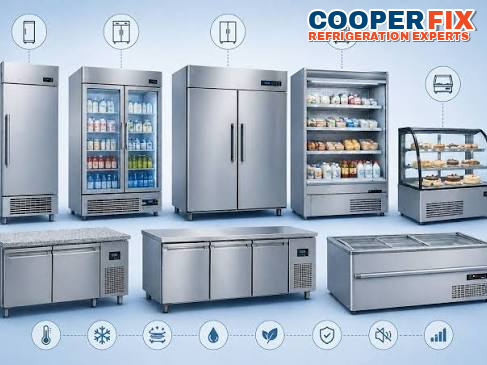
Upright refrigerated storage and display cabinets
For an upright storage or display cabinet, report its normal duty, current loading, door use, temperature recovery and any airflow restriction. Those observations help the technician assess both the cabinet and its connected refrigeration equipment.
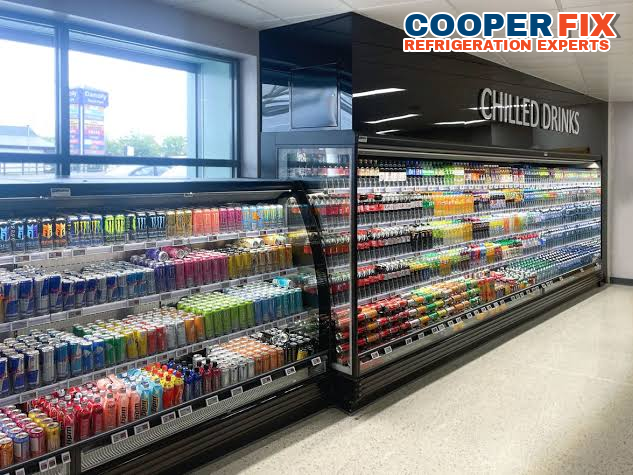
Commercial refrigerated display cases
If one refrigerated display is not performing normally, say which bay or shelf has changed and whether adjacent sections remain unaffected. Describe recent stocking, visible moisture, weak airflow or new sounds. Staff may photograph an externally visible data plate, but should not open the case’s service compartment.
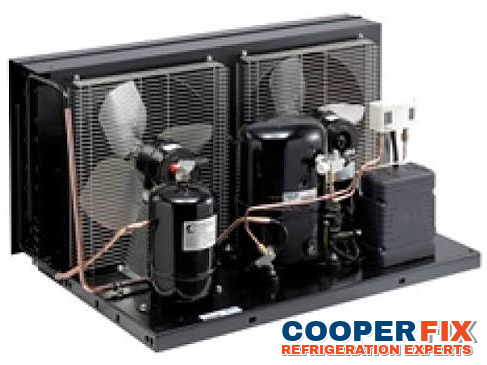
Self-contained and remote condensing equipment
Record the condensing-equipment location, unusual operating noise and any shutdown history. The technician needs access to the affected cabinet or room as well as the equipment that supplies its refrigeration.
How the technician follows the refrigeration system beyond the first symptom
An Angus assessment follows the reported condition through the equipment that serves the affected cabinet, case or room. Airflow, controls, drainage and the refrigeration circuit are considered together before the technician identifies the likely source.
Record the temperature history, controller messages and conditions noticed across the connected equipment. On site, the technician follows the system from the affected unit through the controls, condenser and refrigeration circuit to determine where testing is required. A short timeline of readings taken under comparable conditions helps distinguish sustained warming from a temporary change during a normal operating cycle.
Completed work and confirmed findings should be explained separately from parts or follow-up still required. The service record also needs to state what staff should observe afterward and when another change should be reported.
Defrost is a normal part of how many refrigeration systems operate. The technician checks whether defrost starts, ends and drains as designed, since a defrost cycle that runs too often, too long or not at all can each produce a different temperature complaint.
Arrange access to the complete system
Arrange access to the affected unit, its disconnect and any roof, rear-room or remote component involved. Staff should limit preparation to safe observations from normal controls and leave panels, wiring and refrigeration connections untouched.
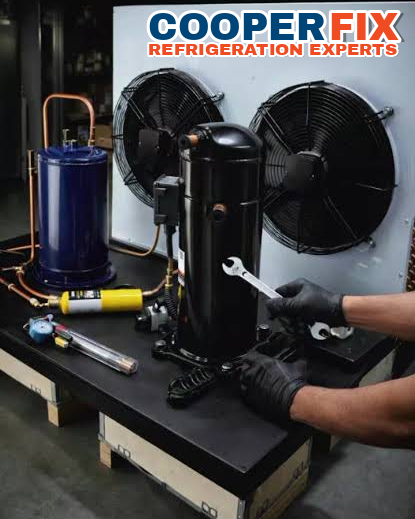
Common commercial refrigeration faults and how repair recommendations are made
Testing establishes whether the practical next step is repair, a period of monitoring or a replacement discussion. The technician weighs the equipment’s condition and business use along with the fault confirmed during the visit.
Airflow and heat-rejection problems
Air movement and frost distribution are checked across the condenser, evaporator, fans and return path. This comparison helps separate a cleaning or clearance issue from a failed fan or another component fault.
Controls, sensors and defrost operation
The technician compares controller commands with sensor values, defrost timing and the response of related electrical parts. That evidence determines whether the correction belongs in programming, sensing, wiring or another control component.
Refrigeration circuit and compressor operation
Incomplete cooling combined with long cycles or partial coil frost can require refrigeration-circuit testing. Any recommendation for circuit work or a major component must be supported by pressure, temperature and operating measurements.
Recurring problems and replacement planning
A replacement review considers the work the equipment must perform, the capacity needed, available power and the existing installation. Cycling pattern, recovery time and operating noise provide context but are not a replacement decision on their own.
Refrigerant-related faults are confirmed with measurements, not by appearance alone. Pressures, temperatures at defined points and the behaviour of the system during a full cycle are compared before any refrigerant work or major component replacement is recommended.
Information Angus businesses should provide before a refrigeration visit
Angus has its own settlement schedule in Essa’s Official Plan and is identified by the Township as a business and commercial hub. A refrigeration request should identify the actual property type, affected equipment and effect on the business rather than assume a particular building layout. Before the Angus commercial refrigeration visit, describe staff observations, the effect of the temperature change on the business and the contact who can coordinate access.
Separate room and cabinet symptoms
State whether the change is limited to one cabinet, one section of a case or an entire cold room. Record each display or controller reading separately instead of combining several pieces of equipment into one temperature description.
Note what happened before the alarm
Write down recent loading, cleaning, door use or a controller reset that occurred before staff saw the problem. Report the sequence without deciding which component caused it.
Identify connected equipment locations
Tell CooperFix whether the affected cabinet or room connects to a condensing unit elsewhere on the property. A safe location description helps the technician plan inspection of both the visible equipment and its remote components.
Keep product decisions with site staff
Name the person responsible for the site’s food-safety or product-handling decisions and describe any alternate refrigerated space already in use. Service intake does not replace the procedures that person follows for exposed product.
Record observations without opening the equipment
Make one entry that pairs the temperature shown on the normal display with the time it was read. In the same entry, note recent stocking and door openings. A clear data-plate photo may be added only from its accessible position; do not shift the unit or loosen a cover.
Record any controller, breaker or safety-control reset and what happened afterward. If the device trips again, stop resetting it and give the technician that sequence so the relevant electrical and control checks can be planned.
Use your food-safety procedures while service is being arranged
Continue monitoring temperature and follow the business’s own food-safety procedures while service is arranged. The person responsible for food safety decides whether product must be moved, while staff keep doors closed where practical and avoid blocking airflow.
If water, ice or an electrical concern makes the equipment area unsafe, restrict access immediately. Tell CooperFix what is visible and where it appears during the call so safe entry can be planned before the technician arrives.
Arrange access to every part of the affected refrigeration system
For the Angus commercial refrigeration visit, provide the full address and unit or suite, locations of the affected equipment and any remote components, parking or loading instructions, and the contact authorized to open restricted, shared or rooftop areas. Identify the refrigeration system and electrical disconnect using the labels staff use on site. If another person controls access to the condensing equipment or disconnect, include that coordination detail. Note any delivery schedule, controlled entrance or customer activity that affects when the equipment can be reached safely. Keep the contact who knows the system available to confirm the unit and reported sequence.
Do not move a fixed cabinet or other installed refrigeration equipment. Clear a safe path only where ordinary stored items can be handled safely, and keep the site contact available to identify the correct unit and review the findings.
Confirm what was found, what was repaired and what still needs attention
The service record should separate the confirmed fault and completed work from any remaining recommendation or temporary measure. It should also state what staff need to monitor and whether a part or return visit is still required. Record the measurement point and operating condition staff should use for later checks. Keep each finding and follow-up instruction attached to the exact cabinet, case or room assessed during the visit.
Store the Angus unit’s model and serial number, controller messages, temperature readings and visit notes together. A later report should cite the earlier visit date, work performed, period of normal operation and subsequent change. Take comparison readings at the same point during a similar stage of site activity.
What to know before requesting commercial refrigeration service
Use the Angus service details below to identify the affected equipment, describe the operating change and arrange access to all connected components. The technician confirms the cause and repair only after testing the installed refrigeration system.
Can an Angus company call CooperFix about a commercial refrigeration problem?
Yes. Describe the type of refrigeration equipment, where it is installed, its current temperature or alarm and the business activity affected. CooperFix uses those details to prepare for the visit; testing at the property is required before the fault and repair can be confirmed.
How should an Angus business describe equipment that is no longer holding temperature?
Record the current and intended temperatures, any alarm text and when the change began. Include visible frost or water, unfamiliar noise, altered run time, recent loading or door activity and whether the problem is limited to one area. Keep following the business’s food-safety process while service is arranged.
Can visible frost tell Angus staff which refrigeration part has failed?
No. Frost alone cannot identify the failed part. Its position and timing may relate to airflow, door use, the defrost cycle, drainage, controls or the refrigeration circuit. Take a photograph only from a safe position and do not remove guards or open electrical covers or service panels.
What site information should accompany an Angus commercial refrigeration booking?
Send the complete address, unit or suite, equipment location, access hours and the name of the person meeting the technician. Note locked rooms, rooftop entry, security steps, loading or parking restrictions and any landlord or property contact needed to reach the equipment.
May an Angus company include multiple refrigeration units in the same request?
Yes. List each unit by location and describe its symptom separately. Point out the issue with the most urgent product or operating consequence so the visit can be planned sensibly. The technician will assess each refrigeration system on its own condition.
What model information and images help prepare an Angus refrigeration visit?
A clear model label, controller screen and full-equipment photograph can help CooperFix identify the unit and understand access. Take them only when staff can do so without moving equipment or removing a cover. Photographs support preparation; they are not proof of a failed component.
Which repair records should an Angus business share when a problem happens again?
Provide the date of the earlier visit, the work performed, the length of normal operation that followed and a description of today’s symptom. Mention when the new change was first observed. Previous records inform the assessment, but do not show by themselves that the same fault has returned.
Request commercial refrigeration service in Angus
For urgent refrigeration service in Angus, phone (647) 483-3777 and describe the affected equipment. Include the address, current temperature, immediate product concern and the contact who can provide access when the technician arrives.
Emergency calls are received and assessed 24/7. Availability and response depend on location, workload and the repair required.
Send your Angus service request
Describe the affected equipment and provide the Angus service address.