
Commercial Refrigeration Repair in Etobicoke
A failed commercial refrigerator is not just a maintenance item when a business depends on stored stock, display space, or a reliable production schedule. A freezer that cannot hold its required condition can disrupt inventory decisions. A walk-in freezer problem may affect a much larger operating area and needs a different service approach. CooperFix provides commercial refrigeration diagnosis and repair in Etobicoke, with the work focused on the actual system and its role in your operation.
Use this page when the affected unit is unclear or when more than one refrigeration category is involved. A restaurant, retailer, or refrigerated storage operation may face different access, load, and scheduling constraints. CooperFix identifies the equipment on site and directs the repair to the relevant fridge, freezer, or walk-in system.
Request service with your business name, Etobicoke location, contact details, the affected unit, and a brief description of the interruption. CooperFix can then assess the request and discuss the next service step.

Plan the commercial refrigeration visit around the affected operation
Commercial equipment
The service scope is limited to refrigeration equipment used by a business.
Technician-led diagnosis
Staff report observations while the technician identifies the equipment fault.
Documented next step
The service discussion separates completed work from parts or follow-up still required.
Describe the Etobicoke equipment that needs attention
Provide the business address, equipment location, observed condition and on-site contact. CooperFix will use those details to discuss the next service step.
Send the service request
How a CooperFix Service Request Moves Forward
Identify the equipment and the business interruption
The first conversation establishes whether the affected system is a commercial fridge, commercial freezer, or walk-in freezer refrigeration system. CooperFix also needs the service address, a contact person, and the practical effect on operations. A display case that is interrupting sales presents a different business problem from a freezer holding reserve inventory. This information helps direct the service request; it is not a technical inspection delegated to your staff. You do not need to interpret a controller or isolate a component before contacting us.
CooperFix diagnoses the cause in the refrigeration system
A technician assesses the equipment and follows the evidence of the fault. Depending on the unit, that work may involve controls, electrical components, fans, compressors, refrigerant-side performance, or the way the unit is operating under its normal load. Similar symptoms can arise from different causes, so a repair should follow professional diagnosis rather than a guess based on a single visible sign.
Repair, verify, and explain the return to service
Once the repair path is agreed, CooperFix carries out the work appropriate to the system and checks its operation. Verification matters because replacing a failed part without addressing the reason the system stopped performing would leave the business with uncertainty. The explanation at completion should distinguish what was repaired, what was checked, and what further attention may be appropriate.
Use the service page that matches the affected Etobicoke equipment
The focused pages explain the service scope for a commercial refrigerator, a cabinet freezer or a walk-in freezer refrigeration system.
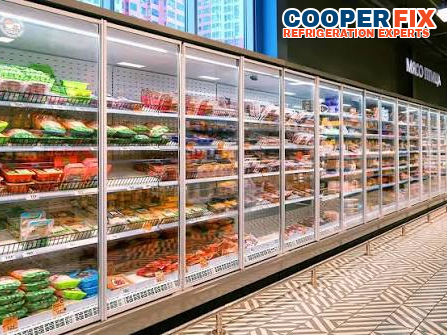 Commercial Fridge Repair in EtobicokeFor reach-in, undercounter, preparation and display refrigerators.
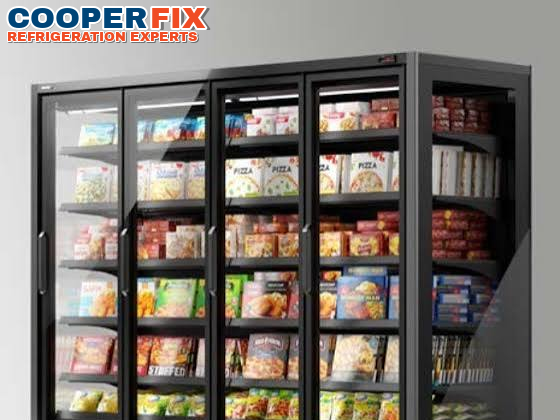 Commercial Freezer Repair in EtobicokeFor upright, reach-in, undercounter and display freezers.
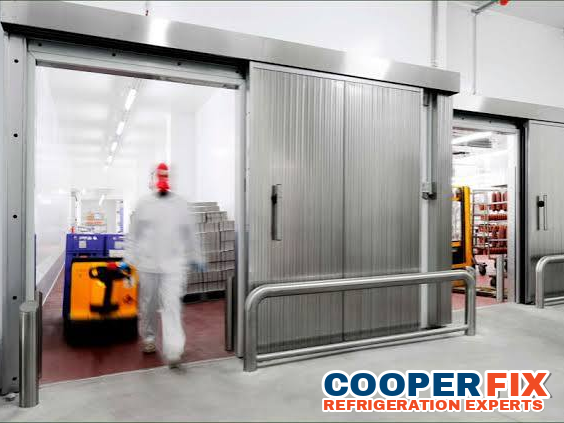 Commercial Walk-In Freezer Repair in EtobicokeFor evaporators, condensing equipment, controls and defrost systems serving a walk-in room.
Use the Service Path That Fits Your Equipment
The installed design determines which components and service checks apply.
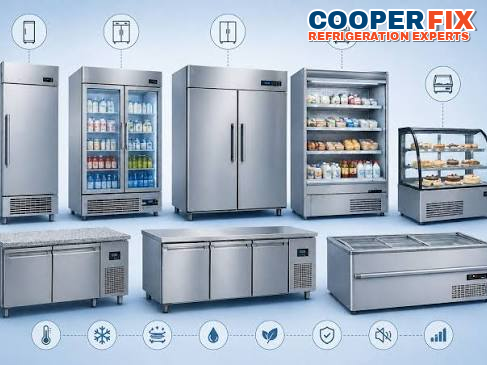
Commercial reach-in refrigerators
Reach-in fridges often support frequent access by staff throughout the day. When a unit runs but does not maintain its required condition, the business may face interrupted preparation, reduced storage capacity, or the need to move product under its own operating procedures. CooperFix examines the refrigeration and control functions that determine how the unit performs, then develops a repair scope for that model and installation. The dedicated commercial fridge service goes deeper into these systems when the affected equipment is clearly a refrigerator.
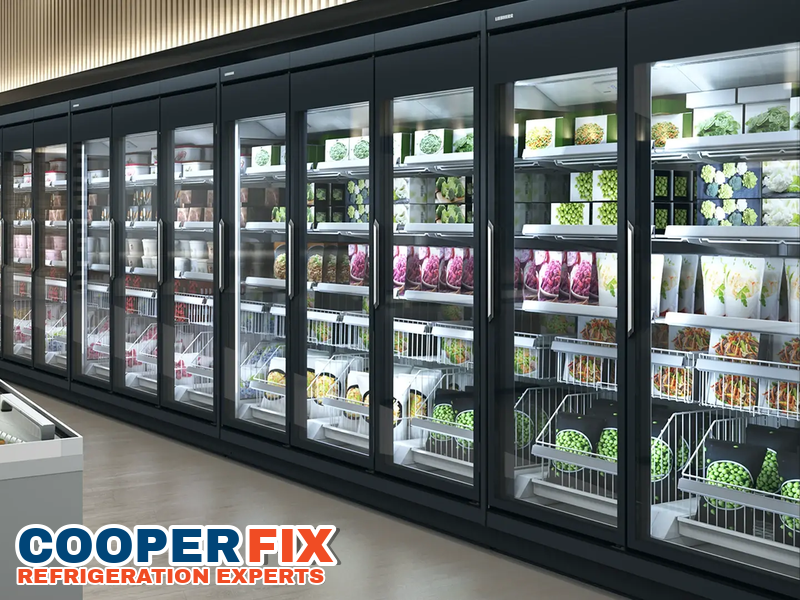
Refrigerated display and merchandising units
A display unit connects refrigeration performance to the customer-facing side of a business. Uneven operation can affect both product handling and the ability to use the display as intended. The technician looks beyond the fact that the unit is powered on: the control sequence, air movement, and refrigeration system each matter to the final diagnosis. This equipment belongs with the commercial fridge service path, but the business consequence may be different from a back-of-house reach-in.
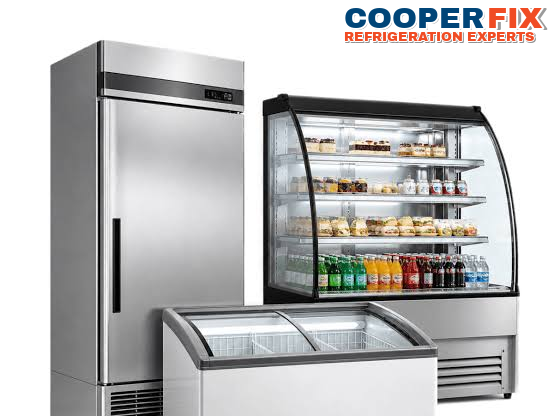
Commercial freezers
A stand-alone commercial freezer has a different operating duty from a refrigerator. A long-running motor, irregular cycling, or a loss of the required storage condition warrants a freezer-specific diagnosis. CooperFix assesses the relevant components and operating behaviour before defining a repair. A freezer service is the appropriate service scope when that is the known system because it can address frozen-stock exposure, equipment load, and repair verification in greater detail without blending in refrigerator-only concerns.
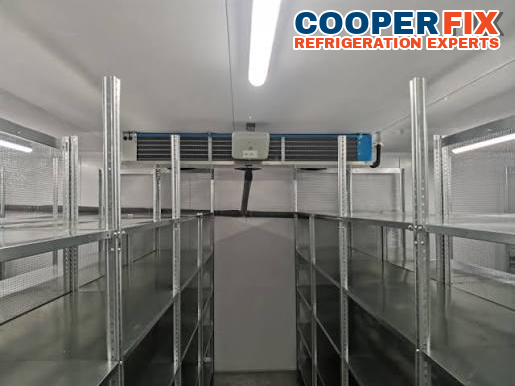
Walk-in freezer refrigeration systems
A walk-in freezer serves a storage room through a refrigeration system whose components and control relationships differ from those of a cabinet. The service scope is the refrigeration system: its equipment, controls, and operation, including installation and commissioning where appropriate. CooperFix assesses the failure in that system and the effect on the room’s operating condition. The dedicated walk-in freezer service develops that larger-system service path.
CooperFix at Work: A System-Based Service Visit
At an Etobicoke visit, the technician identifies the affected equipment, observes its operating sequence, and tests the controls, electrical parts, air movement, and refrigeration components indicated by the evidence. The resulting repair recommendation is tied to that unit and its normal business duty.
The work area may be a customer-facing display, a staff-access fridge, a storage freezer, or a walk-in refrigeration installation. Each imposes different access and operating considerations. CooperFix coordinates the service discussion with the business contact, explains what can be established at the visit, and makes clear when an additional part or further work is required. That is the practical value of a professional visit: an accountable path from the reported interruption to a defined repair and an operating check.
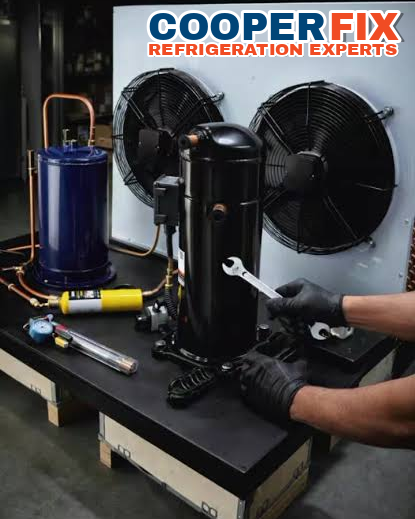
Equipment-specific findings
The technician connects the observed condition to the installed refrigeration system.
What the Repair Service Can Include
The repair recommendation follows the confirmed equipment fault.
Controls and electrical faults
CooperFix compares the controller command, temperature response, and electrical operation of the unit. Testing establishes whether a control, sensor, relay, wiring fault, or another component is preventing the intended cycle. The repair then addresses the verified cause.
Air movement and heat rejection
Fans move conditioned air through the cabinet and reject heat at the condenser. CooperFix checks the relevant motor, controls, airflow path, and refrigeration response to determine why performance is uneven or weak, then repairs the confirmed fault.
Refrigerant-side and compressor work
When evidence points to the sealed circuit, CooperFix tests system performance before recommending compressor or refrigerant-side work. The proposed scope identifies the confirmed fault, required parts, and verification after repair so the business knows what was addressed.
Walk-in system installation and commissioning
Walk-in installation or commissioning begins with the room, refrigeration equipment, controls, electrical requirements, and site conditions. CooperFix defines the work after reviewing those requirements. A known walk-in project should use the dedicated walk-in freezer service path.
Business Situations Behind an Etobicoke Service Call
The equipment role and property access shape the service request.
A restaurant loses usable refrigerator capacity
The request should name the equipment and explain which daily activity it supports.
A retailer has a display unit that cannot perform its role
Staff can report the observed change without assigning a failed component.
A business has frozen inventory in a cabinet freezer
The site contact should provide access instructions for the equipment and any remote components.
A larger storage operation depends on a walk-in freezer
The service record should keep findings and authorization tied to the unit assessed.
A restaurant loses usable refrigerator capacity
Refrigeration capacity is part of a restaurant’s daily operating plan. If a reach-in fridge becomes unreliable during service preparation, checking whether it powers on does not establish whether it can maintain the required temperature. The business needs to know which unit is affected and what repair path is appropriate so it can make its own stock and scheduling decisions. CooperFix assesses the equipment and communicates the technical finding. When a reach-in fridge is affected, CooperFix assesses that cabinet and explains a repair scope specific to its commercial refrigeration functions, without requiring restaurant staff to diagnose the unit.
A retailer has a display unit that cannot perform its role
In a retail setting, a display may be both storage equipment and part of the sales area. A fault can therefore interrupt presentation as well as product handling. CooperFix evaluates the system relevant to that display, including its controls and refrigeration operation, and explains what repair is justified by the finding. An Etobicoke retailer need not know which component has failed before reaching out.
A business has frozen inventory in a cabinet freezer
Frozen stock creates a different operating decision from refrigerated stock. A freezer that cannot maintain the intended condition may require the business to change its inventory handling while a technician addresses the equipment. CooperFix does not turn that business decision into a promised equipment outcome. The service work focuses on the freezer system, its fault, and verification after repair. When the affected unit is a stand-alone freezer, the commercial freezer service can carry the more detailed explanation of that specific service.
A larger storage operation depends on a walk-in freezer
When the affected equipment is a walk-in freezer, the refrigeration system serves a larger storage space and may involve multiple connected components. The site manager needs a clear account of what part of the system is failing and what work is proposed. CooperFix assesses the refrigeration equipment and its operation, then explains the scope needed to restore proper function where repair is feasible. The dedicated walk-in freezer service is the focused path for this request. Neither the room size nor the urgency determines the cause or repair time.
Etobicoke Commercial Refrigeration Repair FAQ
These answers explain how to prepare equipment, symptom and access information without asking staff to diagnose the unit.
Which service should I use if I already know the affected equipment?
Use the commercial fridge service for a refrigerator or refrigerated display, the commercial freezer service for a stand-alone freezer, and the walk-in freezer service for a walk-in refrigeration system. Those services explain the specific equipment and service scope in greater depth. If several units are involved, or the problem has not been classified, this Etobicoke main service is an appropriate starting point. A service request can identify the affected units without naming the failed component.
What information is useful when requesting service?
Provide the Etobicoke service address, business contact, equipment type if known, and a short description of how the fault is affecting operations. A make and model may help if readily available, but it is not a condition for asking for help. CooperFix will determine the technical issue through its service process. Staff do not need to remove panels, take measurements, or prepare a fault report before a professional assessment can be discussed.
Can CooperFix work on both refrigerators and freezers?
Yes. The commercial refrigeration service described here includes commercial fridges, commercial freezers, and walk-in freezer refrigeration systems. They should not be treated as one identical repair category: the intended operating condition, components, and business effect differ. CooperFix identifies the equipment involved and bases the diagnosis on that system. The three equipment-specific services let a business read about its own situation without sorting through unrelated unit types.
What happens if the unit is running but performance is poor?
Running equipment can still have a control, electrical, airflow, or refrigeration fault. The technician assesses the operating behaviour and checks the components relevant to the evidence. The goal is to establish why performance is poor, not to label the visible symptom as the repair. CooperFix then discusses the work indicated by the diagnosis and checks operation after the agreed repair. The business remains responsible for its own product-handling decisions while the equipment is being assessed.
Is a walk-in freezer request handled like a cabinet-freezer call?
Both involve frozen storage, but the refrigeration system serving a walk-in room is a distinct service scope. Access, connected components, controls, and verification may differ from a stand-alone freezer. CooperFix assesses the walk-in refrigeration equipment and frames any repair, installation, or commissioning work around that system. The dedicated walk-in service is therefore the better place to explore a known walk-in issue, while this Etobicoke service explains where it sits within the broader service offering.
Can you tell us the repair scope before the technician assesses the unit?
The request conversation can establish the equipment and the business interruption, but an exact repair scope depends on the fault found. Similar reports can have different underlying causes. CooperFix’s technician evaluates the relevant system, explains the findings, and discusses the proposed work. If a part or additional visit is needed, that should be made clear as part of the service discussion. A generic symptom alone is not enough to responsibly select a repair.
How do the experience and warranty statements apply?
Experience informs the technician’s approach, while diagnosis and the condition of your equipment determine the proposed work. Ask how coverage applies to your service when the scope is explained. The technician can distinguish that coverage from any further work the equipment may need.
Arrange commercial refrigeration service in Etobicoke
Describe the affected equipment, current condition, business address and access contact. If the issue is urgent, call (647) 483-3777 with these details.
Emergency calls are received and assessed 24/7. Availability and response depend on location, workload and the repair required.