
Commercial refrigeration repair in King Township
CooperFix provides commercial refrigeration repair in King Township for businesses that depend on chilled storage, frozen storage and refrigerated displays. Service covers the refrigeration equipment behind those functions, including evaporators, condensing units, controls and connected components. The first task is to establish how the affected system is performing and what has changed during normal use.
A technician investigates the installed equipment, takes relevant measurements and explains the work supported by the findings. Tell CooperFix whether the concern affects receiving, stored stock, a display or more than one part of the operation.
Report the affected commercial refrigeration system clearly
Give CooperFix the King Township service address, affected equipment, observed change and contact who can provide access.
- Displayed temperature, controller message, frost, water, sound and run-time change, with the time observed
- Equipment label, make and model when safely visible
- Directions to the evaporator, condensing equipment, controls and electrical disconnect and the authorized access contact
Request commercial refrigeration service in King Township
Safe observations are enough before the visit. Include a phone number and email address for service coordination.
Connect the service request to the refrigeration duty
Begin with the King Township address, the equipment involved and the change staff have noticed. Explain how the installation is normally used and whether that use has recently changed. This gives the technician a practical starting point without asking the business to determine a refrigerant condition, electrical fault or replacement specification.
Identify the affected storage or display function
Describe where the equipment is located and what it normally does. Say whether the concern involves a warmer area, a stopped system, frost, a new sound or an alarm. Include existing readings with their source and time, keeping them separate from assumptions about the cause.
Arrange access to connected equipment
Provide a contact who can reach the storage area and any separate refrigeration machinery. Explain restrictions on access or interruptions to ordinary operation. Existing equipment references and service records are helpful when available, but staff should not open machinery or carry out tests to complete the request.
Review the technical finding and work required
CooperFix explains what the assessment establishes and whether the next action concerns repair, further investigation or planned work. The scope identifies the equipment and relevant components. Completed actions and outstanding requirements remain distinct so the business knows what has actually been addressed.
Find the King Township service page for your equipment
A King Township request should follow the affected refrigeration duty. Use fridge repair for chilled display or storage equipment, freezer repair for frozen-storage cabinets, and walk-in freezer repair for the system serving a room.
 Stainless reach-in refrigeration equipment for commercial storage.chilled commercial equipmentCommercial fridge repair in King Townshipreach-in refrigerator, preparation table, undercounter fridge, beverage cooler or display case.
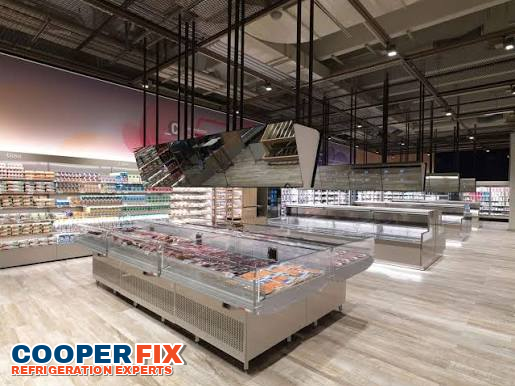 Island freezer cases for commercial frozen-food storage.frozen-storage equipmentCommercial freezer repair in King Townshipreach-in freezer, undercounter freezer, frozen display case or low-temperature storage cabinet.
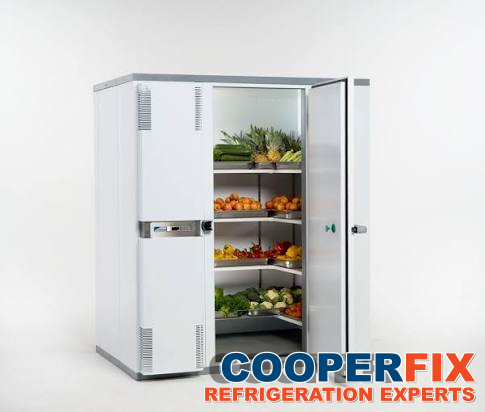 Cold-room storage illustration.walk-in freezer equipmentWalk-in freezer repair in King Townshipevaporator, condensing unit, controls, defrost components, drain and refrigeration lines serving the freezer room.
Large refrigeration installations serving different operating needs
Storage, display and remote machinery are connected parts of a refrigeration operation, but they are not interchangeable descriptions of the equipment. CooperFix confirms the installation and its intended duty. A fault is assessed against that arrangement rather than attributed to a component simply because its name is familiar or its appearance has changed.
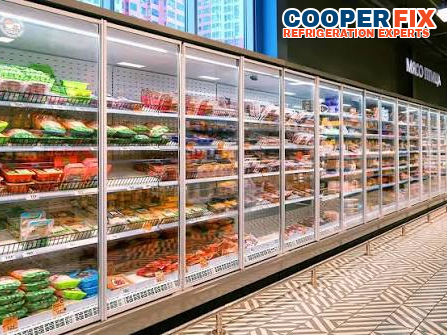
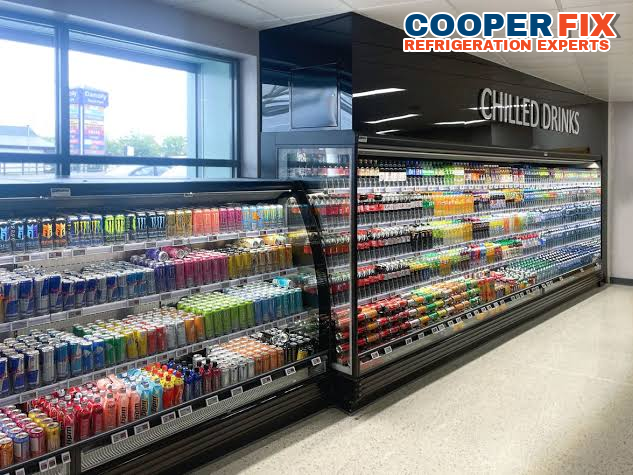
Extended refrigerated food displays
For a long display, identify where the concern is most noticeable and whether it extends along the full installation. Describe its normal use and the timing of stock replenishment. The technician considers those observations alongside the equipment arrangement and measured conditions, without assuming that every section has the same fault.
Remote condensing equipment
Separate condensing equipment can require access away from the refrigerated area. Tell CooperFix its known location and who can arrange entry. The technician confirms which system it serves, then assesses the relevant compressor, controls and refrigeration conditions. Nearby machinery is not automatically included in a complaint about a particular room or display.
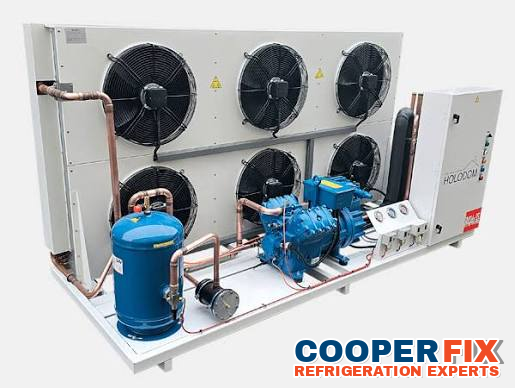
Multi-fan cold-room evaporators
The installed evaporator and its applicable controls are assessed as part of the room’s refrigeration system. Describe changed sound, visible frost or an affected area from an ordinary accessible position. The technician determines the relevant fan, defrost and refrigeration checks for that design rather than choosing a part from the symptom alone.
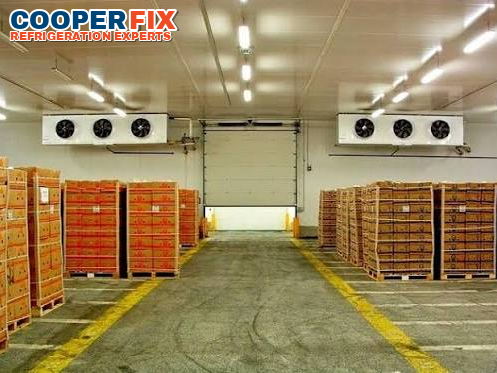
Large beverage refrigeration installations
A large beverage installation may have a complaint that appears during restocking or persists through quieter periods. Describe which condition actually occurs and which section is affected. CooperFix checks the refrigeration serving the display, relating the operating account to findings on the installed equipment before explaining the work required.
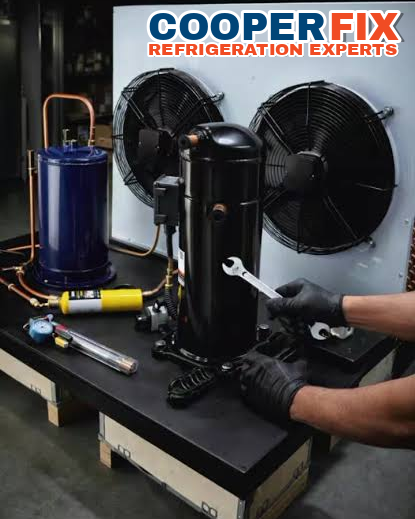
CooperFix at work: assess the refrigeration behind the storage routine
On a King Township refrigeration visit, the technician relates the reported condition to the equipment serving that part of the business. A complaint first noticed during receiving may concern a display, a storage room or connected machinery. The assessment establishes the actual arrangement instead of treating the timing of a delivery as a technical explanation.
Relevant investigation can include temperature response, controls, fans, electrical functions, defrost and the refrigerant circuit. CooperFix considers the findings together and explains their limits. A single normal reading during attendance does not erase a recurring complaint, while an abnormal reading needs its measurement location and operating circumstances understood before work is proposed.
Keep routine activity and technical assessment separate
Tell CooperFix when ordinary activity affects access to the refrigeration equipment. Staff can identify the operating routine and make existing records available; the technician performs the technical checks. Do not change the routine solely to reproduce a fault unless the attending technician has agreed how that observation will be made.
Repair and longer-term refrigeration work
CooperFix provides fault repair, planned maintenance, replacement and refrigeration-system installation. Each starts from a different need. An active operating concern should be identified even when the business is also discussing future equipment, so the current fault and the proposed change receive separate explanations.
Repair an established refrigeration fault
The repair follows the technician’s findings on the affected installation. Work can involve applicable controls, sensors, fans, electrical components, defrost or the refrigerant circuit. CooperFix explains how the proposed action relates to the complaint and records the checks made afterward, including any condition still requiring investigation or a further component.
Maintain equipment around its actual use
A maintenance plan considers the equipment, operating routine and known concerns. Identify systems used continuously as well as those brought into use for changing storage needs. The technician reviews the relevant condition and explains further work where needed. A maintenance attendance is not a reason to omit a recurring fault from the request.
Assess replacement against the required function
Replacement planning considers what the installation must do and what the existing equipment can support. Explain proposed changes in storage or display use before a component or system is selected. CooperFix distinguishes a repairable finding from a different equipment requirement and identifies the information needed to define the proposed replacement.
Install and commission refrigeration systems
Installation concerns the agreed refrigeration equipment, connections and intended operating requirements. Commissioning establishes the relevant checks after the work. The handover identifies what was installed, which operation was assessed and any remaining action, so staff have a clear account of the arrangement entering service.
Describe the storage duty, not only the product name
Describe the storage duty, not only the product name
Agriculture, including vegetable production, is part of King Township’s economy. Where a business uses commercial refrigeration for its operation, the service request should identify the equipment’s intended role. Holding refrigerated stock, serving a display and handling a changed storage requirement are different descriptions of how an installation is being used.
Describe the storage duty, not only the product name: operating context
Explain what has changed from the established routine and whether the current equipment was selected for that use. CooperFix assesses the refrigeration arrangement and the reported concern. The product name alone does not establish a required temperature, system capacity or suitable replacement, and those details should not be guessed during booking.
A concern during receiving needs the operating sequence explained
If a change is noticed while stock is received, describe what happened before, during and afterward. Include the affected storage area and whether the same concern occurs when no delivery is taking place. This helps distinguish a repeated operating pattern from a single reading noticed during a busy period.
A concern during receiving needs the operating sequence explained: operating context
The technician considers that account with the installed system and relevant measurements. A delivery coinciding with a temperature change does not establish the cause by itself. Keep staff observations factual rather than assigning blame to a loading routine, and report settings or equipment changes already made in response to the concern.
Locate the affected part of a display or storage system
At a King Township property, identify the installation and the part of it that prompted the call. A long refrigerated display may have one affected end, several positions or a change across the complete run. Use existing section labels if different staff members report the condition.
Keep each reading with its location and time, and state which areas appear to remain normal. CooperFix confirms the controls and refrigeration connections before applying one finding to the whole system. Separate visible sections do not automatically reveal where technical boundaries lie.
Explain the effect of a changed storage routine
If stock positions, shelving or the storage routine changed before a complaint, describe what changed and when. Explain which chilled or frozen operation is affected and whether suitable alternative capacity exists. A changed layout provides useful context, not proof that it caused the equipment condition.
The business continues its own monitoring and product-handling procedures. Staff need not rearrange stock or test fans to demonstrate the concern. CooperFix assesses the installed refrigeration and airflow functions and explains which findings support repair, maintenance or further investigation.
Make site access match the complete installation
Provide the full King Township operating address, affected display or room location and contact who can admit the technician. Identify any known remote condensing equipment or controls and who can authorize entry to those areas. A site may have different contacts for storage and machinery access. State whether access to the machinery area requires a separate appointment or escort.
Explain restrictions that actually apply, including a period when equipment cannot be reached. Do not enter guarded or restricted spaces to confirm a connection before the visit. CooperFix establishes the arrangement during assessment while the site contact coordinates practical access.
Keep a future change in duty separate from completed work
After assessment, retain the equipment identity, confirmed finding, work completed and any outstanding requirement. If the business plans a different storage or display duty, record that proposed function separately from the present fault and the work already carried out.
A condition review does not itself confirm that the existing installation meets a new requirement. CooperFix can identify information needed for maintenance, repair or a replacement proposal. The record should distinguish a proposed upgrade, a pending component and a completed service action for the next contact. Retain the intended future storage role in the proposal record so it is not confused with the present equipment duty.
King Township commercial refrigeration service information
These answers help connect the business’s storage or display concern to a service request. The technical cause and appropriate work are established through assessment of the installed refrigeration equipment.
Can CooperFix assess refrigeration used by a produce business in King Township?
CooperFix assesses commercial refrigeration equipment and systems serving the identified storage or display function. Describe the actual installation and reported change. The product name alone does not establish equipment suitability or the technical work required; those depend on the application and assessment findings.
What details help when the problem appears during deliveries?
Describe the affected equipment, the sequence around receiving and whether the concern remains during quieter operation. Include observations already available rather than conducting a new test. The technician compares that account with the actual refrigeration arrangement before establishing a cause.
Should we identify individual sections of a long display?
Yes. State which positions are affected and which appear normal, using existing labels where possible. CooperFix confirms the equipment and control connections before extending a finding across the installation. A long display is not automatically treated as one identical repair at every section.
Should a change in stock layout be mentioned?
Yes. Describe when the layout changed and the conditions staff noticed afterward. Do not dismantle equipment or alter the arrangement to recreate the complaint. The technician considers airflow and the installed refrigeration functions alongside the available history rather than assuming that the layout caused the fault.
What if the equipment seems normal when the business is quieter?
Report both the active-period concern and the quieter-period observation, with their times. This helps describe the pattern but does not establish equipment capacity or a cause. CooperFix assesses the system and explains any remaining uncertainty when the reported condition is intermittent.
Can maintenance confirm suitability for a new storage use?
A maintenance review describes equipment condition within its agreed scope. A different storage duty needs its own requirements established. Tell CooperFix about the proposed use so current faults, maintenance findings and any replacement or installation proposal remain clearly distinguished.
How do we request urgent refrigeration service in King Township?
Call (647) 483-3777 with the operating address, affected equipment and present condition. Describe the interruption to storage or display operations and provide the access contact. CooperFix assesses the information and discusses the next available action for the reported installation.
Arrange commercial refrigeration service in King Township
Call CooperFix with the King Township service address, affected unit and contact who can provide access.
Emergency calls are received and assessed 24/7. Availability and response depend on location, workload and the repair required.
Send the King Township service details
Provide practical arrival directions and confirm roof, locked-room or landlord coordination in advance.