
Commercial Refrigeration Repair in Richmond Hill
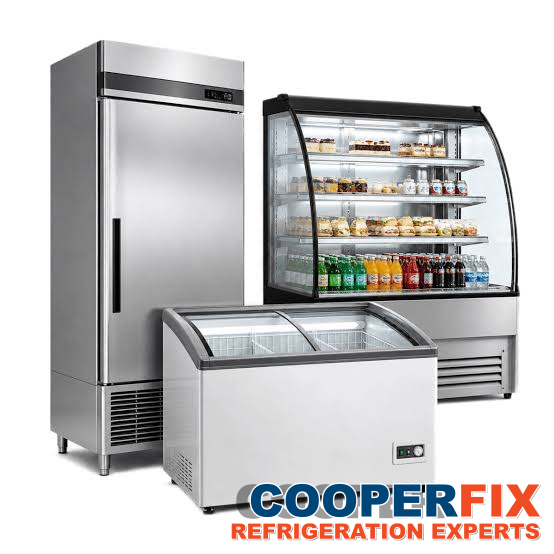
Commercial refrigeration carries different responsibilities across a Richmond Hill business. A customer-facing fridge must support the display or service area where it is used. A standalone freezer may hold stock for a later production or sales period. A walk-in freezer refrigeration system serves an entire room and can affect a broader inventory plan. CooperFix repairs these three commercial equipment categories.
Richmond Hill has retail and commercial uses around Yonge Street and Highway 7, as well as established employment areas. The equipment and its business consequence shape the call. CooperFix brings 20+ Years of Experience to commercial refrigeration work. The 90-Day Parts & Labour Warranty applies to covered work under its terms.

Report the affected commercial refrigeration system clearly
Give CooperFix the Richmond Hill service address, affected equipment, observed change and contact who can provide access.
- Equipment label, make and model when safely visible
- Directions to the evaporator, condensing equipment, controls and electrical disconnect and the authorized access contact
- Displayed temperature, controller message, frost, water, sound and run-time change, with the time observed
Request commercial refrigeration service in Richmond Hill
A photograph is useful only when it can be taken safely. Include a phone number and email address for service coordination.
From Business Interruption to Authorized Repair
1. Explain where the interruption reaches the business
An operator can contact CooperFix about the fridge supporting a display, a freezer holding frozen stock, or the refrigeration system serving a walk-in room. The initial description may say how the interruption affects use of that equipment, who can provide access and who can authorize a repair. This is not a request for staff to identify a failed part.
2. Let the technical finding define the proposed work
CooperFix’s technician examines the installation associated with the report. A commercial fridge, standalone freezer and walk-in freezer system have different arrangements of controls, electrical functions, air movement, defrost and refrigeration components. Which of these is relevant depends on the equipment and the evidence found on site. A temperature concern alone does not establish whether a control, electrical part or refrigeration function is responsible.
3. Close the service decision on the installed equipment
Once the business authorizes a defined repair, CooperFix carries out the applicable work and assesses the equipment’s operation in relation to the reported issue. The service account should distinguish what was repaired from any separate concern that remains. That distinction matters where a business has several units or a walk-in room alongside standalone equipment.
Find the Richmond Hill service page for your equipment
A Richmond Hill business might report a public display problem, reserve-stock freezer trouble or a walk-in room no longer serving its planned use. Choose the route matching the installation; CooperFix assesses the reported unit rather than the address as a whole.
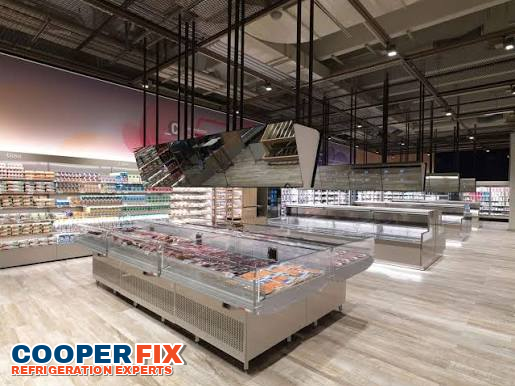
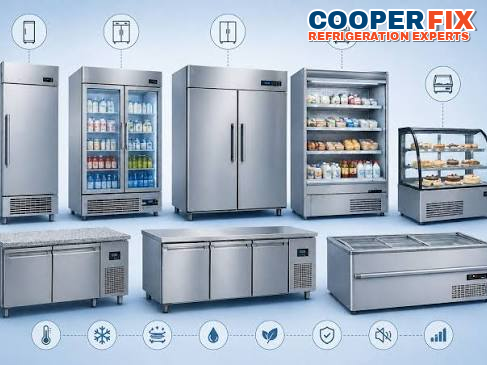
 Glass-door refrigeration for commercial meat display.chilled commercial equipmentCommercial fridge repair in Richmond Hillreach-in refrigerator, preparation table, undercounter fridge, beverage cooler or display case.
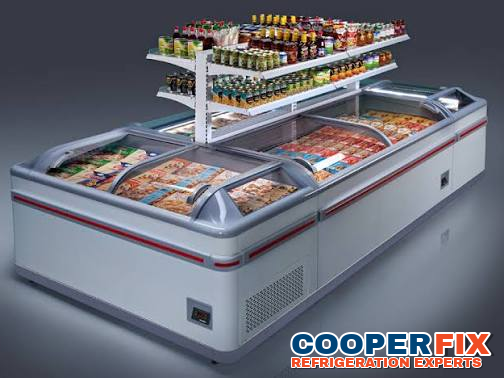
 Island freezer cases for commercial frozen-food storage.frozen-storage equipmentCommercial freezer repair in Richmond Hillreach-in freezer, undercounter freezer, frozen display case or low-temperature storage cabinet.
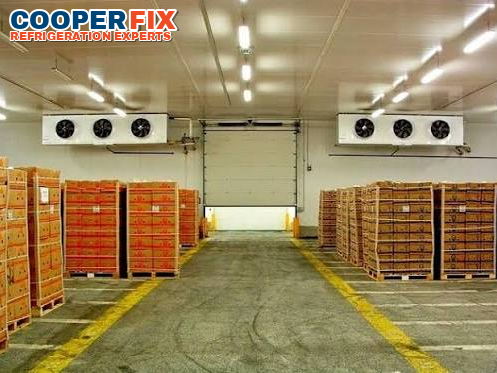 Twin evaporators serving a large commercial cold-storage space.walk-in freezer equipmentWalk-in freezer repair in Richmond Hillevaporator, condensing unit, controls, defrost components, drain and refrigeration lines serving the freezer room.
Commercial Refrigeration Paths for Richmond Hill
Commercial fridges serving presentation and working stock
Commercial fridges can be prominent in a customer area or positioned where employees draw working stock. In either setting, CooperFix evaluates the installed fridge as a specific cabinet, not as a stand-in for a citywide standard model. The technician relates the complaint to the cabinet’s actual controls, electrical operation, internal air path and refrigeration functions.
Standalone freezers protecting a separate stock plan
A standalone commercial freezer is a self-contained business unit rather than a smaller version of a walk-in room. Its storage role can be distinct from the fridge that supports immediate service. CooperFix assesses the freezer’s relevant controls, electrical start-and-run functions, defrost operation and refrigeration performance according to its configuration. A failure to hold intended frozen-storage conditions should be investigated in that equipment, not explained through the behaviour of a nearby fridge.
Walk-in freezer refrigeration serving room-scale storage
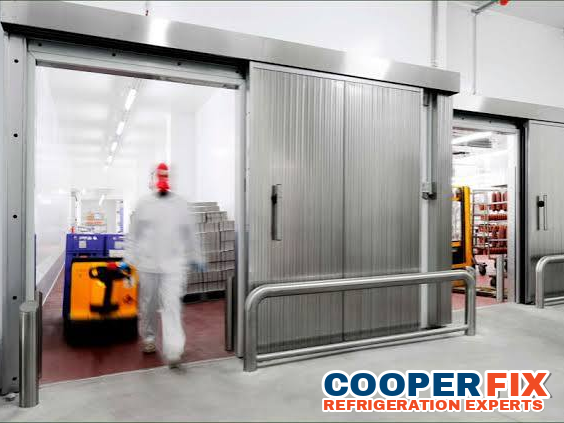
A walk-in freezer depends on a refrigeration system serving the room. Its relevant components may be distributed across evaporator-side and condensing-side equipment, with controls and defrost functions affecting their operation. CooperFix’s service concerns that refrigeration system and its installation and commissioning where applicable. The technician considers the relationship among system functions before proposing a repair. This is a room-scale technical scope, distinct from a single standalone freezer cabinet.
Premises with different commercial storage roles
Some business premises contain a public-facing fridge, a separate freezer and a walk-in room. Their operational importance may vary within the same day or stock cycle, but they remain different equipment equipment. CooperFix can discuss the business impact across the premises while keeping technical findings and authorization specific to each affected unit or system.
CooperFix at Work: A Repair Explanation a Business Can Use
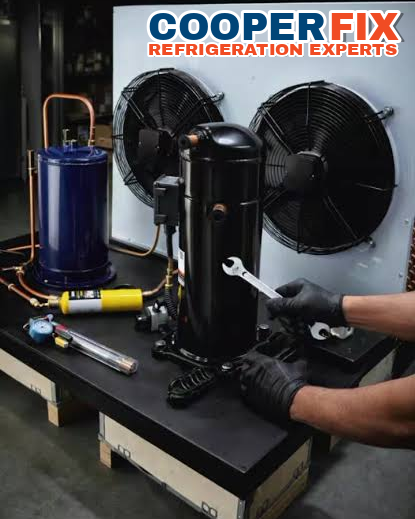
Professional service produces an explanation linked to the actual equipment. A technician identifies the unit or system, examines its operation, separates evidence from possible causes and tells the authorized contact what work is supported. A fridge complaint in a sales area may require a cabinet-level finding. A standalone freezer calls for a different assessment. A walk-in room requires consideration of its connected refrigeration system.
For a Richmond Hill display, stock freezer or walk-in room, the handoff should name the unit and the function checked after work. CooperFix distinguishes an observed response from any operating condition that could not be evaluated during the visit.
Make the complete system accessible
Identify the on-site contact and any property-management step needed to reach the full system. Point out known controls, disconnects and remote components without opening protected equipment.
How the Professional Assessment Changes by Equipment
Why can a running fridge still need repair?
The fact that a commercial fridge appears energized does not establish that its intended cabinet conditions are being maintained. CooperFix examines how the installed fridge responds to its controls and how its electrical, air-movement and refrigeration functions relate to the complaint. A cabinet serving a display may create an immediate merchandising decision; one supporting working stock may interrupt a different workflow. Those business consequences do not identify the faulty component.
What distinguishes an interrupted freezer from a fridge issue?
A standalone freezer operates for frozen storage and has its own relevant defrost and start-and-run behaviour. CooperFix looks at the installed model and the pattern supported by examination. An interruption may involve an electrical function, control response, defrost component or refrigeration performance, but no single customer description proves which one. A neighbouring fridge may continue to operate normally. The service recommendation therefore concerns the freezer’s evidence and the effect on its frozen-stock role.
Why does a walk-in room require system reasoning?
The walk-in freezer room is served by interacting refrigeration equipment rather than one cabinet assembly. CooperFix considers the relevant evaporator-side, condensing-side, control and defrost functions as a system. A similar room-level symptom can arise from different mechanisms; choosing work solely from the symptom risks overlooking the actual relationship. The technician establishes a supported finding and defines the work on the refrigeration system.
How is a recurring complaint treated after earlier work?
A previous repair record can help establish what was done, but it is not proof of the present fault. CooperFix examines the affected equipment again and relates current findings to the reported recurrence. A new issue in a fridge cabinet is not automatically the earlier control issue; a walk-in freezer symptom need not repeat an earlier defrost fault. The technician explains whether the evidence supports a related or separate repair.
Richmond Hill Business Situations That Shape the Service Conversation
A customer-facing location has a visible interruption
Retail and commercial uses near Richmond Hill Centre can include equipment in view of customers. If a commercial fridge supporting display is affected, the operator needs a service conversation that recognizes both the cabinet and the public-facing consequence. CooperFix focuses the technical assessment on that fridge and communicates the supported repair to the person able to authorize it.
An employment-area premises depends on stored stock
Richmond Hill also has established employment areas, where an operator’s concern may centre on inventory rather than public display. A standalone freezer or walk-in freezer system can serve that need, yet those two categories call for different professional assessment. CooperFix identifies which installed equipment is affected and explains its relevant repair scope.
A business changes how its space is used
Commercial occupancy and stock flows can change while equipment remains installed. A fridge once used for one line of products may support another workflow, or a freezer may become more central to a revised stock plan. CooperFix does not infer the equipment’s present fault from an old account of how the space was used.
Several contacts, one repair approval
A tenant may report a problem, a property contact may coordinate access, and a business owner may authorize the work. These are distinct responsibilities even when all concern one Richmond Hill address. CooperFix can establish the affected equipment and communicate technical findings to the appropriate decision-maker.
Describe the interruption at the customer-facing unit
A visible display problem affects the offer customers see, but it does not identify the cause. Name the cabinet, its location and the change staff observed. The operator manages products and presentation while CooperFix establishes the equipment finding and the work it supports.
Coordinate stock-site access and repair authority
At an employment-area premises, a site manager may open the equipment area while an owner or operations contact approves repairs. Supply both contacts with the service request. The technician explains the finding to the decision-maker; staff need not perform measurements or diagnose components before calling.
Assess the equipment in its current use
A business may change how a commercial space is used without changing the installed refrigeration immediately. Identify the unit’s present role and complaint. CooperFix examines its actual configuration, so a repair proposal does not depend on an outdated description of the premises.
Keep multiple contacts aligned on each repair
When access, operation and authorization belong to different people, the service account should name the affected unit and proposed work clearly. A second faulty unit needs its own description and authorization. One premises-wide interruption must not become an unsupported diagnosis of a common mechanical cause.
Richmond Hill Commercial Refrigeration Repair FAQ
These answers explain what to report and how access is planned. The installed system still requires an on-site assessment.
What equipment does this Richmond Hill service page cover?
This main page introduces CooperFix’s repair service for commercial fridges, standalone commercial freezers and walk-in freezer refrigeration systems. Each is a different scope. A business can start here to discuss its refrigeration operation broadly. The corresponding child page provides more detail when the affected unit or system is known. CooperFix’s technician establishes the repair finding on the installed equipment rather than assuming the same fault applies across categories.
Is a customer-facing fridge assessed differently from one behind the counter?
Both are commercial fridge cabinets, but their installations and business roles may differ. CooperFix examines the specific model and complaint rather than relying on where the cabinet stands in the premises. The public-facing unit may interrupt display; a back-of-house unit may interrupt working stock. Neither consequence identifies the faulty component. The technician relates cabinet operation and evidence to a proposed repair, while the business manages its own product and service decisions.
Why does a standalone freezer have its own Richmond Hill page?
The standalone freezer is a distinct unit with low-temperature storage duty, controls, start-and-run behaviour, defrost and refrigeration functions appropriate to its design. A general commercial refrigeration page cannot treat that depth without obscuring the fridge and walk-in system paths. The freezer page addresses the narrower intent of an operator whose specific unit is failing. CooperFix still assesses the actual freezer on site before identifying a cause or recommending a repair.
Does CooperFix repair the refrigeration system of a walk-in freezer?
Yes. CooperFix can diagnose and repair the refrigeration system serving a walk-in freezer and can perform refrigeration-system installation and commissioning within that service scope. Assessment may involve evaporator-side and condensing-side operation, controls, electrical functions and defrost as relevant to the evidence. The technician defines the work on that system. A walk-in freezer request is therefore routed differently from a standalone cabinet freezer request even though both support frozen stock.
Can a business ask about several affected units at once?
Yes. The operator can describe each affected commercial fridge, standalone freezer or walk-in freezer system and identify the appropriate site and authorization contacts. CooperFix can discuss how the problems affect the business together while examining each unit separately. Shared timing does not prove a shared technical cause. Findings, proposed work and completion status should remain clear for each unit or system so the business understands exactly what was addressed.
What if an earlier repair did not resolve the current concern?
Tell CooperFix which equipment is involved and that the concern has returned. A prior record may help establish the earlier work, but the current equipment condition still needs professional examination. The technician can explain whether present evidence supports a related issue, a different fault or further investigation. The business is not expected to reproduce measurements or choose a component.
What information is useful when contacting CooperFix?
Give the Richmond Hill site address, identify the affected fridge, standalone freezer or walk-in refrigeration system as clearly as practical, and name a contact for access and repair authorization. Describe the business interruption in ordinary language, such as affected display or frozen-stock operation. CooperFix can discuss the assessment and availability from there. Staff do not need to run technical tests or interpret component behaviour to request professional service.
Request Commercial Refrigeration Repair in Richmond Hill
Call CooperFix with the Richmond Hill service address, affected unit and contact who can provide access.
Emergency calls are received and assessed 24/7. Availability and response depend on location, workload and the repair required.
Send the Richmond Hill service details
Identify the on-site contact and any property-management step needed to reach the full system.