
Commercial Refrigeration Repair in Vaughan
In Vaughan, a refrigeration interruption can surface at customer selection, during working-stock storage or in frozen inventory held for a longer cycle. Those consequences may involve different equipment. CooperFix repairs commercial fridges, standalone commercial freezers and the refrigeration systems serving walk-in freezers. A service request begins with the affected unit and its business role. Diagnosis and the repair recommendation belong to the CooperFix technician examining the equipment.
Municipal planning material identifies Vaughan Metropolitan Centre as its downtown core and also plans employment lands. In either setting, the service question is which refrigeration unit disrupts the operation and which scope fits it. CooperFix brings 20+ Years of Experience to that conversation. The 90-Day Parts & Labour Warranty applies to covered work under its terms.

Report the affected commercial refrigeration system clearly
Give CooperFix the Vaughan service address, affected equipment, observed change and contact who can provide access.
- Directions to the evaporator, condensing equipment, controls and electrical disconnect and the authorized access contact
- Displayed temperature, controller message, frost, water, sound and run-time change, with the time observed
- Equipment label, make and model when safely visible
Request commercial refrigeration service in Vaughan
The business is not expected to perform technical tests. Include a phone number and email address for service coordination.
A Service Request Built Around the Affected Unit
1. Describe the interruption at its business handoff
A customer-facing fridge affects a different decision from a freezer holding reserve stock. The Vaughan operator can identify the site, equipment category and business consequence in ordinary language: an interrupted display, standalone frozen stock or a walk-in system affecting broader inventory. CooperFix does not ask the customer to identify a failed component or perform technical tests. If several units are involved, naming them separately prevents one assumed diagnosis from obscuring the service request.
2. Let a technician establish the equipment finding
The technician assesses the installed equipment and reported behaviour. A commercial fridge may call for examination of controls, air movement and refrigeration operation. A standalone freezer has low-temperature and defrost functions of its own. A walk-in freezer requires assessment of the refrigeration system serving the room. A similar symptom across equipment does not prove a shared cause. CooperFix establishes the finding for each unit or system and explains proposed work to the authorized contact.
3. Authorize work against a defined scope
A business should know which unit is being repaired, the technician’s finding and the proposed scope before authorizing work. A cabinet component, freezer operating sequence or connected walk-in system may each require a different response. After authorized work, the technician can explain the repair and relevant operating observations.
Find the Vaughan service page for your equipment
A Vaughan site may have customer-facing chilled stock, a separate frozen reserve and a walk-in room. The service route depends on the unit behind the interruption, not the property’s general refrigeration label or the number of cabinets at the address.
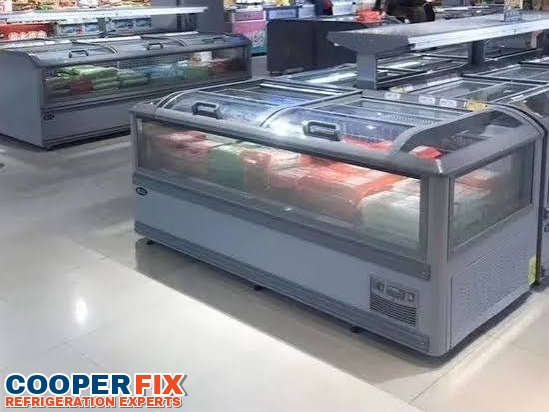
 Glass-door refrigeration for commercial meat and produce display.chilled commercial equipmentCommercial fridge repair in Vaughanreach-in refrigerator, preparation table, undercounter fridge, beverage cooler or display case.
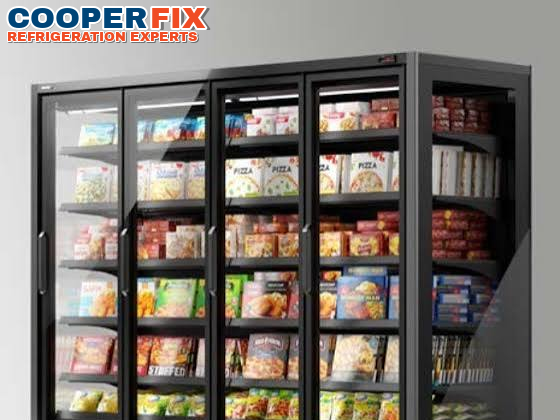 Glass-door freezer display for commercial frozen storage.frozen-storage equipmentCommercial freezer repair in Vaughanreach-in freezer, undercounter freezer, frozen display case or low-temperature storage cabinet.
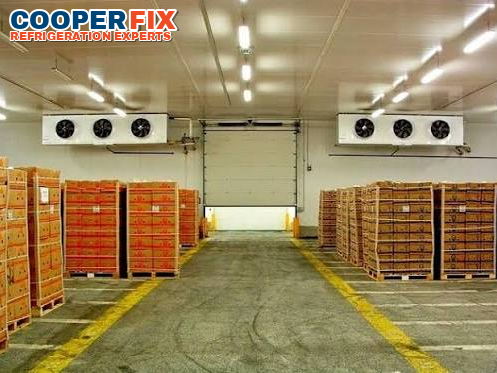 Twin evaporators serving a large commercial cold-storage space.walk-in freezer equipmentWalk-in freezer repair in Vaughanevaporator, condensing unit, controls, defrost components, drain and refrigeration lines serving the freezer room.
The Refrigeration Equipment Behind Different Vaughan Operations
Commercial fridges in customer-facing service
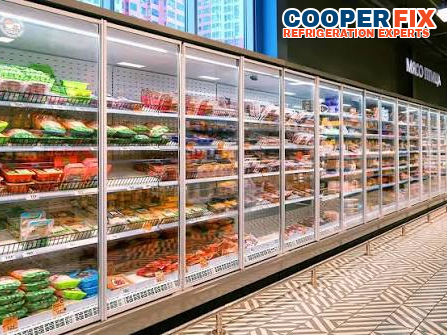
A commercial fridge serving public selection or immediate service is more than a box displaying a number. It must support the operating conditions of the actual cabinet while the business uses the space around it. A temperature complaint may be tied to control response, evaporator-side operation, fan function, refrigeration performance or another condition that requires examination. CooperFix assesses the specific fridge rather than treating lost sales as a diagnosis.
Commercial fridges supporting working stock
A fridge out of customer view may still be central to a Vaughan business’s next operating period. Such a cabinet may hold items awaiting use or replenishment, and its interruption may appear first as a stock-planning problem rather than a visible display failure. CooperFix still evaluates the installed fridge and its serviceable refrigeration functions. The business does not need to translate operational disruption into a technical theory.
Standalone commercial freezers
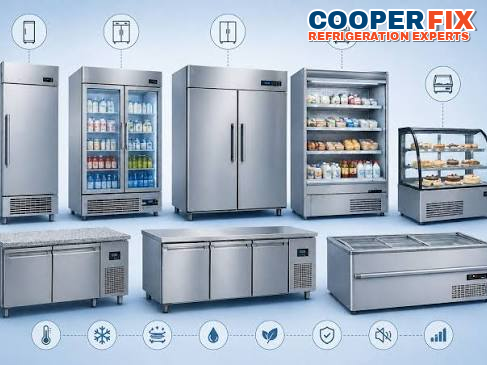
A standalone freezer is a self-contained business unit with a low-temperature duty that should not be folded into general fridge language. Its control response, start-and-run behaviour, evaporator and condensing functions, and defrost operation may each matter to a professional assessment, depending on the model and evidence. CooperFix examines the unit to distinguish a symptom from a cause.
Walk-in freezer refrigeration systems
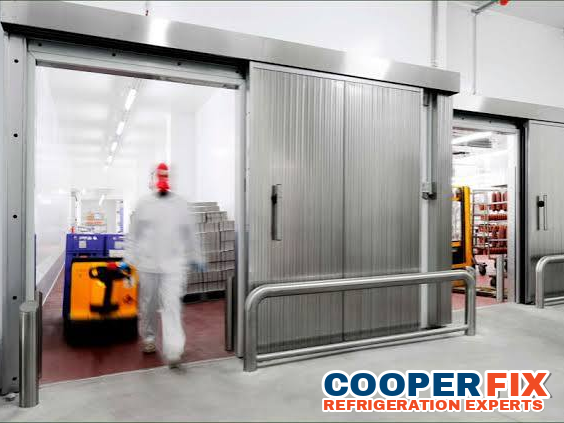
A walk-in freezer presents a system-level refrigeration question rather than a standalone cabinet question. Its evaporator-side equipment, condensing-side equipment, controls and defrost operation can interact across the installation. CooperFix repairs the refrigeration system serving the walk-in freezer and can perform refrigeration-system installation and commissioning within that scope. The technician must identify what the installed configuration actually requires; a business-impact statement alone cannot determine whether a control, component or broader system condition is involved.
CooperFix at Work: Evidence Before a Repair
A CooperFix technician approaches an affected fridge, standalone freezer or walk-in system as installed equipment with a business role, an operating history and observable behaviour. The work is to examine relevant refrigeration and control functions, distinguish a plausible explanation from a demonstrated finding, and define a repair the business can authorize. What matters is the relationship between the particular unit, the fault found and the proposed work.
For a Vaughan unit, CooperFix relates the reported symptom to the refrigeration and control functions actually installed. The record names the equipment, examination and supported repair, while any separate freezer or fridge concern remains its own service decision.
Maintain a unit-by-unit log when more than one refrigeration unit is involved. The service record should distinguish observation from assumption.
Make the complete system accessible
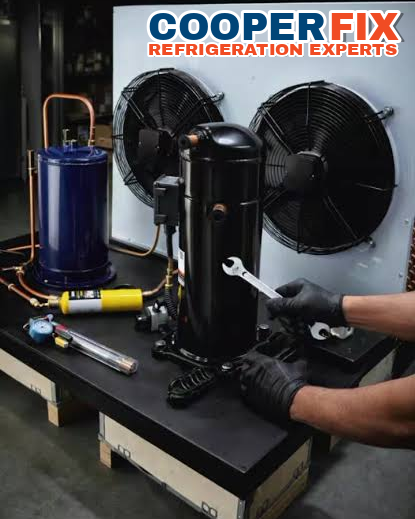
Coordinate the service entrance, roof or locked-area access with the responsible facility contact. Point out known controls, disconnects and remote components without opening protected equipment.
Repairs That Follow the Equipment, Not a Generic Symptom
Equipment type, application, operating history and current findings all affect the next step for a commercial refrigeration system.
A warm cabinet is a starting observation
If a commercial fridge is not performing as the business expects, the word “warm” describes the interruption but not the failed part. CooperFix can assess control operation, the refrigeration circuit and the air-distribution functions relevant to that cabinet. The technician considers the unit’s design and observed behaviour before recommending work.
A freezer complaint needs its own low-temperature assessment
Reduced freezer performance can affect frozen inventory even when the equipment appears to be running. A technician may need to evaluate start-and-run behaviour, controls, defrost and refrigeration performance as applicable to the installed standalone unit. Different findings lead to different work; no single symptom proves that one component is responsible. CooperFix frames the recommendation around the condition found on that freezer. This preserves a useful boundary between an individual freezer and a walk-in system.
A walk-in system must be assessed as a connected installation
The refrigeration system serving a walk-in freezer can involve equipment in more than one position. CooperFix evaluates the relevant components and operating sequence together so a local symptom is not mistaken for the full system cause. That may involve refrigeration-unit operation, controls, electrical functions and defrost behaviour, according to the evidence. Installation and commissioning work on the refrigeration system is also within CooperFix’s service scope when applicable.
One site can produce more than one repair scope
A Vaughan operation may call because two refrigeration equipment are affecting the same business day. That does not make them a single technical fault. A display fridge, a standalone freezer and a walk-in freezer system can share premises while having separate equipment designs, controls and service findings. CooperFix can discuss the collective business interruption, then preserve unit-by-unit clarity in assessment and proposed work.
Vaughan Operating Settings and the Correct Repair Route
A Metropolitan Centre display fridge tied to the public offer
Vaughan Metropolitan Centre is the city’s downtown core, with pedestrian-oriented commercial uses. Where a business relies on a fridge display there, a control indication visible to staff may not reflect how the stocked area performs. CooperFix assesses the cabinet’s actual air delivery, controls and refrigeration functions before defining a repair.
A standalone freezer supporting an employment-area stock plan
Vaughan’s employment areas include premises where a business may hold frozen stock for later movement. That is a different duty from a public fridge display. CooperFix assesses the individual freezer’s low-temperature operation, including its control and defrost functions where relevant, and explains a supported repair.
One tenant with a fridge display and separate frozen reserve
A business may report one operational interruption while both a display fridge and standalone freezer require attention. CooperFix identifies which unit produced each complaint and examines each according to its own design. A reading or alarm on the fridge cannot prove the freezer’s condition, and the freezer’s repair does not close a separate display problem.
A walk-in freezer system at a managed commercial premises
Where a walk-in freezer serves a larger stock room, its evaporator, controls and condensing equipment may not all be in the room. CooperFix establishes the serving system and the access needed for professional assessment. A property representative may arrange access while the business contact authorizes a defined refrigeration-system repair.
Keep the Metropolitan Centre display in its own scope
A public-facing fridge can affect the offer at a Vaughan business, but it remains one defined cabinet. Identify the display and its observed change. The technician assesses that unit; a separate freezer does not enter the repair scope simply because it belongs to the same tenant.
Report the reserve freezer’s status for stock planning
An employment-area operator can explain when replenishment makes the freezer issue pressing without diagnosing it. CooperFix reports the cabinet finding, work proposed and any open dependency. The business manages inventory movement and is not promised a result by a dispatch time.
Separate display and frozen-reserve findings
One Vaughan contact can coordinate access to a fridge display and a separate frozen reserve. Each affected unit still needs its own technical finding, repair authorization and post-work status. This gives the operator distinct information for its public offer and stock decisions.
Identify the walk-in system at a managed premises
Where property staff control access, provide the business contact and route to the equipment serving the freezer room. CooperFix assesses that refrigeration system rather than a self-contained cabinet. The report names the function repaired and observed response; room-use decisions remain with the operator.
Vaughan Commercial Refrigeration Repair FAQ
These answers explain what to report and how access is planned. The installed system still requires an on-site assessment.
What commercial refrigeration equipment does this Vaughan page cover?
This main page covers CooperFix’s commercial fridge repair, standalone commercial freezer repair and repair of the refrigeration systems serving walk-in freezers. It helps a business identify the right equipment path for a professional service request. Each child page then develops one narrower equipment category. If an operation has more than one affected unit, CooperFix can discuss the overall business interruption while keeping each unit or system’s assessment and proposed repair separate.
How is the Vaughan commercial fridge service different from freezer service?
The two units categories have different operating duties and can produce different business consequences. A commercial fridge may support public display or working stock, while a standalone commercial freezer holds frozen inventory in an individual unit. CooperFix evaluates the installed equipment’s own controls, refrigeration functions and reported behaviour. Similar complaints do not justify using the same diagnostic conclusion.
Is a walk-in freezer treated like a large standalone freezer?
No. CooperFix treats the walk-in freezer’s refrigeration equipment as an installed system, with components and controls that may be distributed across the installation. A standalone freezer is an individual cabinet or unit. For the walk-in, the technician examines the relevant refrigeration functions and their interaction, then defines the proposed work on that system.
Can one request include several units at a Vaughan site?
Yes. The operator can identify each affected commercial fridge, standalone freezer or walk-in freezer refrigeration system and describe the business interruption for each. CooperFix can then discuss access and authorization for the site and assess the equipment individually. Two units failing at around the same time do not establish that they share a technical cause.
What does CooperFix need to begin the service conversation?
Provide the Vaughan service address, a contact who can arrange access, the affected equipment category if known and a contact for repair authorization. A plain description such as an interrupted display, unavailable frozen stock or a walk-in system concern is enough to orient the request. CooperFix can discuss the service assessment from there. Staff are not expected to take readings, inspect components or prepare a technical report.
How are urgent Vaughan service requests handled?
CooperFix receives and assesses emergency requests under its availability process. The conversation can address the location, workload and repair involved, without an assumed arrival or completion time. The technician must still determine the equipment condition before defining a repair scope. The operator can make separate stock and customer decisions while the professional service request is being assessed.
What happens after a technician identifies the repair scope?
CooperFix explains the finding and proposed work for the affected commercial fridge, standalone freezer or walk-in freezer refrigeration system to the authorized business contact. The business can then decide whether to authorize that scope. After the authorized repair, the technician can describe the work performed and the relevant operating observations. Coverage under the 90-Day Parts & Labour Warranty depends on its terms.
Request Commercial Refrigeration Repair in Vaughan
Call CooperFix with the Vaughan service address, affected unit and contact who can provide access.
Emergency calls are received and assessed 24/7. Availability and response depend on location, workload and the repair required.
Send the Vaughan service details
Coordinate the service entrance, roof or locked-area access with the responsible facility contact.