
Walk-in freezer repair in Alliston
When a walk-in freezer room in Alliston stops holding temperature, tell CooperFix what changed and how frozen storage, receiving or production is affected. A technician can assess the evaporator, controls and condensing equipment that make up the refrigeration system serving that room.
For an Alliston walk-in freezer, describe the individual room and connected equipment instead of assuming a standard layout for one of New Tecumseth’s centres. Report room recovery, evaporator frost, drainage and condensing-unit observations from safe locations.
Tell us about the walk-in freezer system that needs attention
Send the Alliston street address, an on-site contact, which freezer room is affected and what its display and evaporator show right now. If several rooms are warming, describe each one separately and say which loss would hurt frozen stock, production or receiving the most.
- Room and setpoint readings, controller message, coil frost, fan noise, water, door closure and condensing-unit activity
- Evaporator or condensing-unit nameplate details, if readable
- Condensing-unit location and who can let the technician reach it
Request walk-in freezer service in Alliston
Provide a phone number and email address where CooperFix can confirm the equipment, site and access details.
What happens after you contact CooperFix
Each walk-in freezer call starts from the staff account of the room, then moves to the evaporator, condensing unit and controls keeping it frozen.
Describe what changed
Give the room display reading, whether the evaporator coil looks iced, any water below it and whether the condensing unit sounds different. Staff open nothing. If a controller or breaker was reset, say which and what followed.
Confirm the address and access
Give the street address, unit number and the person who will lead the technician to the freezer room. Say whether the condensing unit sits on a roof or in a locked mechanical space, and whether a landlord or other tenant controls entry.
Review the diagnosis and next step
Once the freezer system is inspected, the technician explains what failed, what was fixed, which repair choices exist, which parts are needed and whether to return. Recommendations rest on that diagnosis, not frost alone.
Walk-in freezer equipment we service in Alliston
A warm freezer room can trace back to the evaporator inside, the condensing unit outside or the controls between them. Say which room is affected and where each component sits. Model details and how symptoms developed guide where the technician looks.
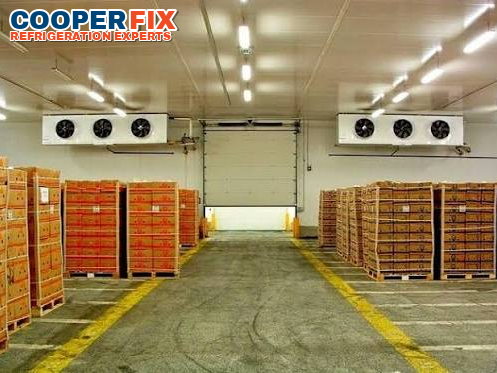
Refrigeration system serving the freezer room
Identify the freezer room, intended temperature, current reading and the refrigeration components known to serve it. Explain where the evaporator, controls and condensing equipment are installed. CooperFix services that connected refrigeration system; work on the structural enclosure, floor, panels, door or hardware is outside scope.
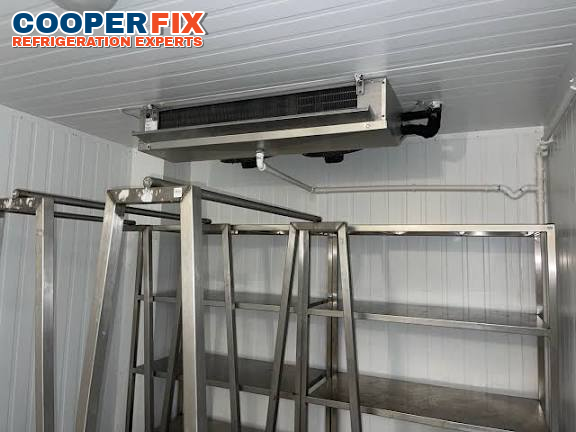
Evaporator, fans and defrost components
From a safe position, report evaporator frost, fan sound, water, controller messages and whether the condition returns after defrost. Do not touch the coil or remove a guard. The technician evaluates airflow, fans, sensors and the defrost sequence with the rest of the refrigeration system.
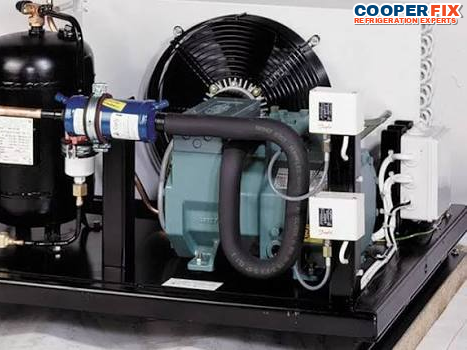
Remote condensing equipment
Give the condensing unit’s location and any roof, mechanical-room or restricted-area access requirements. Note unusual noise, short cycling or longer operation without approaching unsafe equipment. Compressor, condenser and circuit measurements are required before major-component work is proposed.
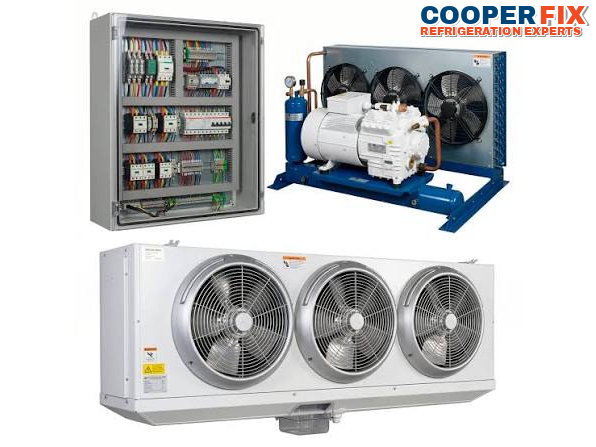
Connected controls and refrigeration components
Copy the controller message and room temperature and identify any protective device that stopped the system. Do not keep resetting it or open an electrical enclosure. On-site testing checks the control response, wiring and refrigeration connections in the context of the complete installed system.
How the technician follows the walk-in freezer system beyond the first symptom
Ice in the room or a rising display reading does not always start at the evaporator. The technician traces how the room connects to its condensing unit and controls, then follows airflow, wiring, the drain line and refrigeration circuit.
Work begins with the room’s temperature trend, controller codes and what staff noticed. In the room the technician checks coil frost, evaporator fans, drain flow, sensors, defrost timing and whether the room is closed properly. The review then continues outside to the condensing unit, compressor, wiring and refrigerant circuit.
Following the whole freezer system keeps the recommendation from resting on one frosted coil or warm reading. Before leaving, the technician reviews what failed, what was done, what remains and which readings staff should watch.
Reduced evaporator airflow can be accompanied by frost, but the frost pattern and timing do not identify the cause by themselves. The technician compares room temperatures, fan operation, defrost behaviour and the rest of the connected refrigeration system before recommending work.
Arrange access to the complete system
Staff only log temperatures, alarms and changes they notice; nothing is opened or measured. Before the visit, make sure the freezer room, its disconnect and the condensing unit can be reached, and name who will hear the results.
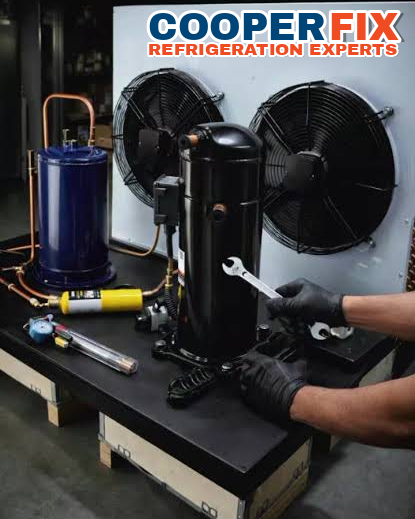
Common walk-in freezer faults and how repair recommendations are made
Which repair fits depends on the installed system, its condition, how hard the room works and what testing confirms.
Room-wide temperature change
A room-wide rise can involve airflow, defrost, controls, electrical components or the refrigeration circuit. Report room temperature, ordinary entry activity and refrigeration-system observations separately. The technician checks the evaporator and condensing equipment together before recommending a refrigeration repair.
Frost and drainage problems
Record where ice or water appears, when it returns and how it relates to the defrost period. The technician tests heaters, sensors, fans, controls and the refrigeration drain path before choosing work. Work on structural thresholds, floors, doors and enclosure panels is outside this service.
Fan, control and electrical faults
Preserve controller alarms and report a stopped fan, tripped device or safety shutdown from a normal observation point. Leave guards, disconnect covers and electrical panels closed. The technician tests the actual sequence before identifying a refrigeration-system component for repair.
Recurring problems and replacement planning
Provide the earlier service date, work completed and period of normal room operation. Current temperature behaviour, refrigeration capacity, equipment condition, system duty and access are assessed again. Those findings guide repair, monitoring or replacement of refrigeration components, not structural work on the room.
Compressor problems in walk-in freezers can show as noise, running hot or repeated starting and stopping. Because these signs can also come from airflow or refrigerant issues, the technician confirms the cause with measurements before a compressor repair or replacement is discussed.
Report whether lights or other electrical loads inside the freezer room are operating differently from normal. The technician records those observations with room temperature, door activity, airflow, controls and refrigeration-system findings; no single observation is treated as the cause without testing.
Information Alliston businesses should provide before a refrigeration visit
Requests from Alliston should describe the real property and how the freezer room is used there, rather than assuming a typical business or downtown setting. Include the room affected, what staff noticed, how the warming is disrupting deliveries, storage or production, and who can arrange entry to the room and to the equipment that serves it.
Define the installed freezer system
Provide the room name, controller location, evaporator position and known condensing-unit identifier. Mark any connection that the technician must confirm.
Track recovery after ordinary entry
Record the display when door activity ends and after the normal closed interval used by the site. Include any visible access-opening obstruction that staff observed, without attempting adjustments.
Keep frost and drainage locations distinct
State whether frost is at the evaporator, threshold or stored material and whether water is near the drain or elsewhere. Do not enter an unsafe area to improve the description.
Coordinate remote access explicitly
Identify who can open the disconnect, mechanical room or roof area known to serve the Alliston freezer. If that relationship is uncertain, arrange access for confirmation rather than asserting it.
Record observations without opening the equipment
Note the reading on the freezer room display and on any thermometer the business uses, plus the time. Record whether the room was entered often or restocked with warm product. If the evaporator or condensing-unit nameplate can be photographed from where staff normally stand, take that picture.
If a breaker or safety control trips after a reset, leave it and call. Tell CooperFix which device was reset, how often and how the freezer behaved afterward. That record helps the technician plan control testing without forcing equipment that has protected itself.
Use your food-safety procedures while service is being arranged
Freezer repair runs alongside, not in place of, the business’s own food-safety procedures. Keep checking room temperatures, and relocate frozen stock when the person responsible decides the room is no longer suitable. Limit entries where possible and keep pallets and cases clear of the evaporator airflow.
Where ice underfoot, dripping water or an electrical issue creates a hazard near the freezer room, keep people clear. Mention it when calling so safe access is planned before the technician starts.
Arrange access to every part of the affected refrigeration system
Provide the full Alliston address and unit, the freezer-room label, evaporator and known condensing-unit locations, parking or loading directions and the contacts who control restricted access. Keep a safe route to the controller and refrigeration equipment, preserve visible frost for inspection and identify the electrical disconnect without opening it.
Clear loose cartons and carts from around the evaporator and condensing unit if safe, leaving fixed equipment in place. Have the on-site contact ready to point out the right freezer room, describe what was noticed and hear the findings.
Confirm what was found, what was repaired and what still needs attention
Before the technician leaves, ask what caused the fault, what was repaired, what is still advised and whether parts or another visit are needed. Check that the freezer system is running, which readings, fan sounds or drainage staff should watch, and where the report will go. Ask whether any step was only a stopgap, not a finished repair.
Keep evaporator and condensing-unit model data, controller messages, temperature logs and service notes under the same room identifier. If the condition returns, provide the prior visit date and what changed afterward. Monitor room temperature, fan sound and refrigeration drainage through ordinary entry and a normal defrost cycle.
What to know before requesting walk-in freezer service
These answers cover what to report about a walk-in freezer and how visits are booked. Repairs are confirmed after the technician inspects the equipment.
Can an Alliston business request CooperFix service for walk-in freezer systems?
Yes. CooperFix accepts walk-in freezer refrigeration requests from Alliston businesses. Identify the freezer room, evaporator, condensing unit, controller, defrost system and connected refrigeration drainage, along with room readings, alarms and the effect on business operations. The installed refrigeration system is assessed before a repair is confirmed.
What details should staff note when a walk-in freezer room starts warming up?
Record room and setpoint temperatures, controller alarms, evaporator frost, fan sound, refrigeration drainage and condensing-unit behaviour. Include when the change began, ordinary entry or loading and whether the whole room or one area is warmer. Continue the business’s food-safety procedures while arranging service.
Can a frozen-over coil tell staff which component failed?
Not by itself. Coil ice can come from fan problems, a stuck defrost, a blocked drain, control faults, frequent entries or refrigeration conditions. If safe, photograph it, note its location and leave electrical and refrigeration enclosures closed.
What should an Alliston business share so a visit can be scheduled?
Share the street address, unit number, who will meet the technician, site hours and where the freezer room and condensing unit are. Flag any roof access, locked mechanical room, loading-dock rules, security sign-in or landlord approval.
Can one Alliston request list several walk-in freezer systems?
Yes. Put every affected freezer room in the same request, giving each its own location and symptoms, and say which one puts frozen stock, production or receiving at greatest risk. CooperFix then looks at the whole job without blending the details of separate systems.
Which photos and nameplate details are worth sending for a walk-in freezer?
Useful shots include a legible nameplate on the evaporator or condensing unit, the controller screen and a wide view of the room’s refrigeration equipment, taken without moving or opening anything. They help plan the visit, but cannot confirm which part has failed.
When a walk-in freezer problem is urgent, what should an Alliston business provide?
For an urgent request, provide the current room temperature or alarm, affected refrigeration equipment, risk to frozen stock, service address and the person who can open all required areas. CooperFix uses those details to assess urgency, confirm current availability and coordinate access.
What past repair details matter if a walk-in freezer system fails again?
Share the previous visit date, what was repaired and how long the freezer room ran normally afterward. Then describe today’s symptom and when staff noticed it. That background guides a new diagnosis; it does not prove the old fault is back.
Request walk-in freezer service in Alliston
To book a visit, send the business address, affected freezer room, current reading or alarm, stock at risk and who handles access. For urgent problems, call (647) 483-3777 with those details ready.
Commercial Refrigeration Repair in Alliston Commercial Walk-In Freezer Repair service overview
Emergency calls are received and assessed 24/7. Availability and response depend on location, workload and the repair required.
Send your Alliston service request
Describe the affected equipment and provide the Alliston service address.