
On-site walk-in freezer refrigeration service in Toronto
Walk-In Freezer Repair in Toronto
A walk-in freezer depends on a refrigeration system that may extend from the evaporator in the storage space to condensing equipment elsewhere on the property. When temperature performance changes, the business needs the entire operating system assessed in context.
CooperFix performs Toronto on-site diagnosis and repair for walk-in freezer refrigeration. During the assessment, the technician checks evaporator operation, condensing equipment, controls, electrical components, defrost functions and the refrigerant circuit, then explains the corrective work recommended for the verified fault.
- System-focused service for commercial walk-in freezer refrigeration
- Professional diagnosis across connected components and equipment locations
- Access planning for the storage area, service spaces and authorised rooftop locations
For the walk-in request, state the Toronto location, who can authorize access, the storage-temperature change and any available model information for the connected equipment.

Treat a walk-in freezer problem as a connected-system issue
The effect is noticed where frozen stock is held, but the cause may be in a different part of the refrigeration system. The evaporator, condensing unit, controls, sensors, defrost components and refrigerant piping must operate as one system. A useful repair recommendation connects the reported condition to the actual fault across those components.
CooperFix takes responsibility for that technical diagnosis. The business contact explains the operating impact and provides access, while the technician performs measurements, evaluates the connected equipment and determines the work required.
Request Walk-In Freezer Refrigeration Service in Toronto
Tell CooperFix where the system is located, what changed and who can coordinate access to the connected equipment. The request can describe observations only; component identification and technical measurements remain the technician’s responsibility.
- Toronto address and access point for the walk-in refrigeration system
- On-site access contact and callback number
- Short description of the temperature or operating change
- Model and serial information, if readily available
From a storage-temperature problem to a system repair
1. Confirm the system location and access
CooperFix records the business address, the reported change, the person responsible for access and the known locations of the refrigeration equipment. In a multi-tenant property, access to a service area or roof may require separate coordination with building management.
2. Assess the connected refrigeration equipment
The technician evaluates the evaporator, condensing equipment, controls, electrical devices, defrost operation and refrigerant circuit as they apply to the installed system. Professional measurements establish how the components are operating together.
3. Explain the findings and repair scope
CooperFix traces the evidence to the system fault, then defines the refrigeration work intended to correct it. If a component must be replaced, its compatibility with the equipment, electrical requirements and low-temperature application is part of the decision.
Refrigeration equipment that serves a walk-in freezer
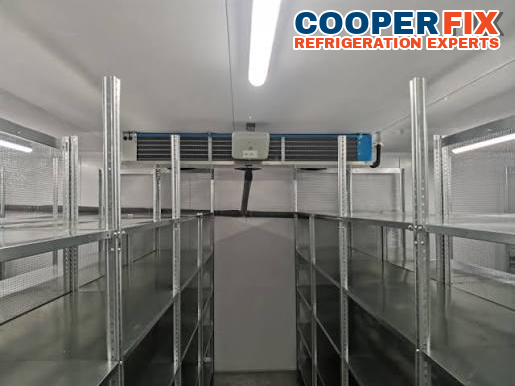
Evaporator assembly
The evaporator absorbs heat from the storage space and depends on fan operation, control inputs and refrigerant flow through the installed circuit. The technician evaluates the assembly in relation to the reported condition and the rest of the refrigeration system.
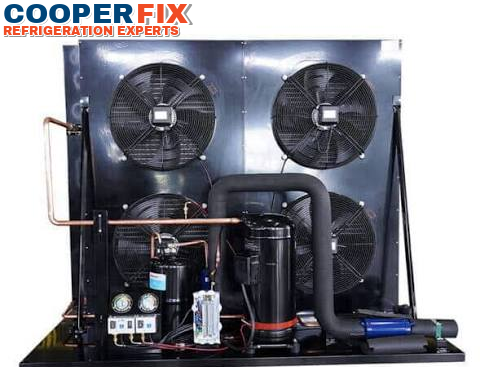
Condensing equipment
The condensing unit may be installed outdoors, on a roof or in a separate service area. Compressor operation, condenser fans, electrical components and system conditions are assessed together when determining the cause of a fault.
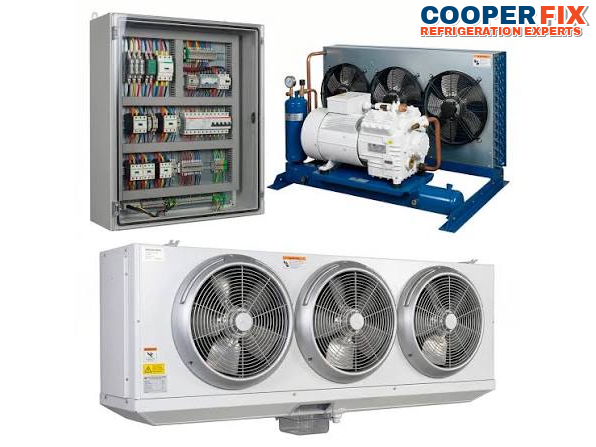
Controls and sensors
Temperature controls, pressure controls, sensors, contactors and protective devices coordinate system operation. CooperFix evaluates relevant inputs, outputs and sequences before recommending control work.
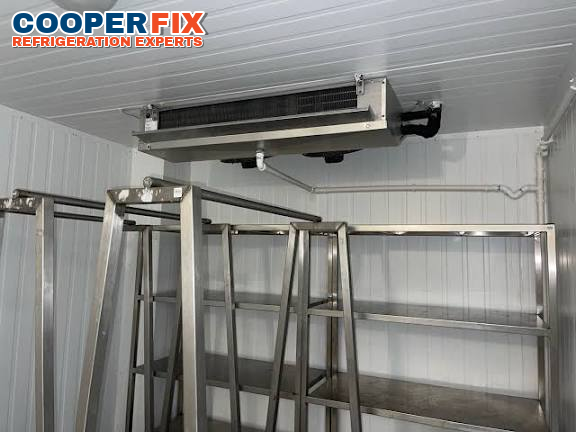
Defrost system and refrigerant circuit
Defrost timing, termination, relevant components and refrigerant flow influence low-temperature performance. The technician assesses these functions as part of the complete installed system rather than as isolated symptoms.
Follow the fault across equipment that may be in separate locations
A business can notice a rising storage temperature or repeated frost while the component responsible is installed beyond the storage area. That separation makes system context essential. The indoor evaporator, remote condensing equipment, controls and connecting refrigerant circuit must be evaluated as related parts of one refrigeration system.
The CooperFix technician uses professional instruments and component tests to determine how the system is operating. Fan performance, control sequences, compressor behaviour, defrost operation and refrigerant conditions are interpreted together. This work distinguishes a visible effect from the fault that requires repair.
The resulting explanation gives the business a defined scope. CooperFix describes what was found, which work is recommended and whether part sourcing or additional access is required for the installed system.
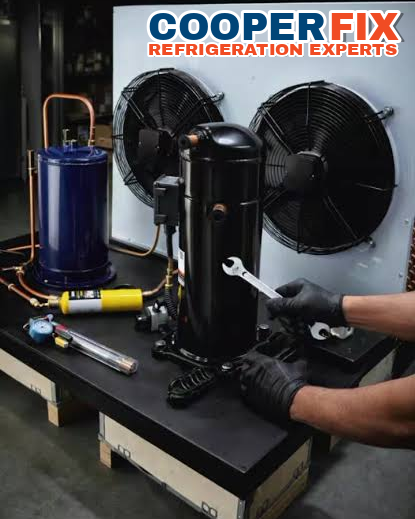
Walk-in freezer refrigeration repair guided by system diagnosis
Evaporator fan and control faults
Fan motors, electrical supply and control signals affect air movement across the evaporator. The technician evaluates the relevant functions and their relationship to the reported storage condition.
Condensing-unit components
Compressor operation, condenser fans, contactors, starting components and protective devices can influence the entire system. CooperFix tests the equipment before proposing a component repair or replacement.
Walk-in freezer defrost controls and components
Low-temperature systems rely on a defrost strategy designed for the installation. Timing, initiation, termination and component operation are assessed when the reported pattern indicates that they may be relevant.
Refrigerant-circuit assessment across the walk-in freezer system
Diagnosing the circuit requires instrument readings that relate pressure, refrigerant movement, temperature and compressor behaviour across the installation. CooperFix interprets those relationships for the connected system.
Sensors, controllers and safety devices
Control components guide operation and protect equipment. A fault can involve the input device, the controller response, the controlled component or the connection between them. Diagnosis establishes which condition exists.
Compatible component replacement
Any replacement must suit the existing equipment, electrical characteristics, refrigerant application and control sequence. CooperFix connects the selected part to the confirmed fault and the repair objective.
Walk-in freezer systems in different Toronto operations
Walk-in frozen storage for restaurant and café operations
A walk-in freezer can support reserve ingredients and planned menu production. A refrigeration fault can reduce available stock and force changes in preparation. CooperFix focuses on the system serving that storage space and the access needed to assess all relevant equipment.
Walk-in frozen storage for food retailers
Frozen inventory may be held for replenishment or direct fulfilment. The operating impact depends on the volume and role of the stored products. The service request can identify that impact while the technician determines the system fault.
Walk-in freezer systems for grocery and convenience operations
A location may have a walk-in freezer alongside several independent cabinets. Identifying the walk-in system clearly prevents its service scope from being confused with other equipment at the property.
Walk-in frozen storage for preparation and distribution
Walk-in freezer systems may support receiving, production, staging or dispatch. Access to the storage area and remote equipment can involve different people or building procedures. Coordinating those details helps the technician assess the full system.
Plan access to every part of the refrigeration system
At some Toronto commercial properties, the evaporator is inside the walk-in while the condensing equipment is on a roof, in a rear service area or in a shared mechanical space. Access may depend on building management, security, elevator or roof arrangements. Identifying those restrictions when requesting service helps CooperFix reach every part of the connected refrigeration system without treating the access detail as a diagnosis.
The evaporator and the condensing unit often occupy different areas of the property. Controls may be located near the storage space, while electrical disconnects or service access may be elsewhere. A technician needs authorised access to the relevant equipment locations to complete a system-level assessment.
The business can support the visit by naming the access contact and known equipment locations. CooperFix performs the technical evaluation; staff are not asked to open equipment or obtain measurements.
Access planning can also prevent an incomplete assessment. If the technician can reach the evaporator but not the condensing unit or the relevant electrical controls, the connected system cannot be evaluated as one installation. Providing the building procedure and authorised contact in advance helps CooperFix discuss what must be available for the service visit.
Connect a frost pattern to the function that causes it
Repeated frost can involve defrost timing, termination, sensors, fan operation, refrigerant conditions or another system fault. The appearance of frost is useful context, but it cannot establish which component should be repaired.
The technician evaluates the defrost sequence and related refrigeration performance. CooperFix then explains the specific condition found and the work intended to correct it.
The evaporator transfers system capacity into the freezer room while fans distribute low-temperature air through the space. CooperFix assesses evaporator operation, fan response and related system functions together, connecting the findings to the reported performance concern without assigning diagnostic work to site staff.
Evaluate performance against the installed application
A walk-in freezer system is selected and controlled for a particular low-temperature application. Product loading, operating demand, equipment condition and component performance all influence how the system responds over time.
Professional assessment determines whether the reported change reflects a component fault, control problem or wider system condition. The repair recommendation must address evidence from the installed system, not a general assumption about demand.
The installed capacity and control strategy also shape how components interact. A correct recommendation considers the evaporator, condensing equipment, metering function and defrost sequence together. This system view helps distinguish a local component failure from a condition that affects performance across the refrigeration circuit.
System operation can also change as controls move between refrigeration demand, defrost and return to normal operation. The technician follows that sequence across the evaporator and condensing equipment, using professional measurements to identify where the intended response is interrupted. This is especially important when individual components appear to operate but the connected system does not maintain its required low-temperature condition.
The repair scope should therefore state both the component work and the system function it is intended to restore. CooperFix explains that connection to the business contact and identifies any additional equipment access needed to complete the defined work.
Controls and sensors coordinate calls for operation and influence how connected equipment responds. The technician evaluates their signals and electrical functions in system context, distinguishing a control-related fault from an issue whose source lies elsewhere in the refrigeration arrangement.
Use service history as context for a new diagnosis
When a system has shown a similar problem before, previous invoices, part information or service dates can help the technician understand the history. That information does not prove that the same fault has returned.
CooperFix performs a current assessment and relates the new findings to the system condition. This approach helps distinguish a repeated component issue from a different fault with a similar business effect.
When a replacement is recommended, the earlier history can help confirm model information and prior component changes. Compatibility still has to be established for the present equipment and fault. CooperFix explains the relationship between the new diagnosis, the selected part and the result the repair is intended to restore.
An intermittent problem may not present the same way throughout an operating period. CooperFix uses current system evidence, reported business impact and relevant service context to define the next professional assessment rather than treating a previous repair as an automatic diagnosis.
Toronto Walk-In Freezer Repair FAQ
What part of a walk-in freezer does CooperFix assess?
CooperFix follows the equipment that maintains the walk-in’s low-temperature space. That scope can cover the indoor evaporator, remote condensing unit, electrical and control devices, defrost functions and the connected refrigerant circuit.
Which practical details help with a walk-in freezer request?
Provide the Toronto business address, an on-site contact, a short description of the operating change and model information when it is readily available. Mention any separate service-area or rooftop access that must be arranged.
Why might the technician need access to more than one area?
The evaporator and condensing equipment can be installed in different parts of a property. Controls and electrical components may also be separate. Access to the connected equipment allows the technician to assess the complete refrigeration system.
What can cause recurring frost in a walk-in freezer system?
Recurring frost can involve defrost operation, sensors, controls, fan performance or refrigeration-system conditions. The technician evaluates the connected equipment to determine the fault associated with the pattern.
How are controls included in the diagnosis?
Controls receive information, direct components and protect the system. CooperFix evaluates the relevant inputs, outputs and controlled equipment to establish whether the fault is in a control device or another part of the system.
Can one request identify another refrigeration unit at the same site?
Yes. List each affected unit separately and identify the walk-in freezer system clearly. CooperFix can discuss which equipment should be included in the visit and the access needed for each one.
What warranty applies to eligible completed walk-in freezer refrigeration work?
For eligible completed walk-in freezer refrigeration work, service documentation identifies the 90-Day Parts & Labour Warranty. Service documentation should link any applicable coverage to the completed walk-in freezer refrigeration work and its defined scope.
Who should I call about an urgent walk-in system concern?
Phone (647) 483-3777 and provide the Toronto site address, details of the walk-in system and its operational effect. CooperFix will explain current availability in light of required access. An online submission alone does not confirm an appointment.
Arrange Walk-In Freezer Refrigeration Service in Toronto
State where the walk-in is located, how the connected equipment can be reached and what changed inside the frozen-storage space. CooperFix uses the request to coordinate access across the refrigeration system.
Emergency calls are received and assessed 24/7. Availability and response depend on location, workload and the repair required.