
York Walk-In Freezer Refrigeration Repair
When a walk-in freezer’s refrigeration system becomes unreliable, a business may have to reorganize stock access, deliveries and production while it seeks a technical answer. CooperFix provides professional assessment and repair of walk-in freezer refrigeration systems for commercial sites in York. We investigate the installed equipment, explain what the findings establish and discuss the work that fits the system. We can also scope refrigeration-system installation and commissioning for an appropriate project.
CooperFix assesses the walk-in’s condensing equipment, evaporator, refrigerant circuit, controls, fans and defrost functions as the installation requires. A single alarm cannot identify the failed component. The business provides the York address, contact and reported interruption; the technician performs the equipment investigation.

Plan the walk-in freezer refrigeration visit around the affected operation
Commercial equipment
The service scope is limited to refrigeration equipment used by a business.
Technician-led diagnosis
Staff report observations while the technician identifies the equipment fault.
Documented next step
The service discussion separates completed work from parts or follow-up still required.
Describe the York equipment that needs attention
Provide the business address, equipment location, observed condition and on-site contact. CooperFix will use those details to discuss the next service step.
Send the service request
The Service Decision Follows the Installed System
Establish the interruption and service contact
The first conversation identifies the business site, the walk-in freezer involved and the person who can arrange access or approve work. A retailer may describe a storage interruption, while a food-service operation may be concerned about planned production. CooperFix can understand that business effect without requiring a staff member to diagnose the equipment. A brief description is enough to start arranging an assessment.
If the request concerns new refrigeration equipment or a replacement system, the business can state the intended application. The actual installation, equipment compatibility and project dependencies must be assessed before a technical scope is defined. A web form or call establishes the conversation, not the final configuration.
Assess interacting refrigeration functions
The technician follows the evidence across the installed system. Compressor operation, electrical starting, control sequence, condenser, evaporator, fans, defrost and refrigerant movement can influence one another. CooperFix checks the functions relevant to the reported condition and identifies whether the visible problem is a primary fault or the result of one elsewhere in the installation. A system that runs but does not serve its intended use may require a different repair from one that does not start.
The explanation to the authorized contact should identify what was confirmed and any limitation that remains. That is particularly useful when a property representative, manager and operating team must coordinate a decision. The technician’s findings provide the basis for repair; the business does not have to interpret measurements independently.
Repair or commission the refrigeration equipment
CooperFix discusses the work supported by the assessment before proceeding. A repair may address a control, electrical, defrost or refrigerant-circuit condition. For installation work, the conversation covers the refrigeration equipment, connections and controls required by the application. Commissioning checks relevant operating functions of the installed system before handover and identifies any issue needing further attention.
After authorized work, the technician describes the repair and the operating functions evaluated during the visit. The business uses that account for its own stock and scheduling decisions. An unresolved condition should be communicated as such rather than described as a completed result.
Equipment That Makes a Walk-In Freezer Work
The installed design determines which components and service checks apply.
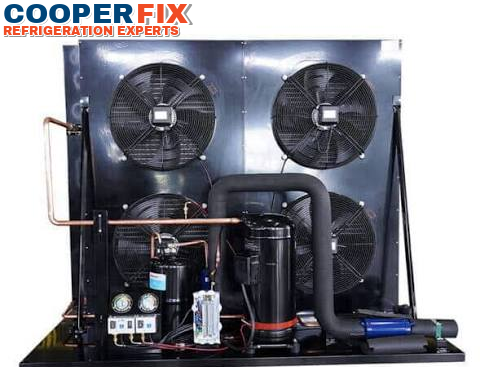
Compressor and Condensing Unit
The compressor moves refrigerant through the system and operates with electrical starting, protection and controls. A failure to start, repeated trips or unexpected running behaviour can result from more than one component. CooperFix examines the unit and connected functions to determine whether compressor-related work is justified. The proposal is based on evidence from the installed refrigeration system, not the assumption that a prominent component must be the cause.
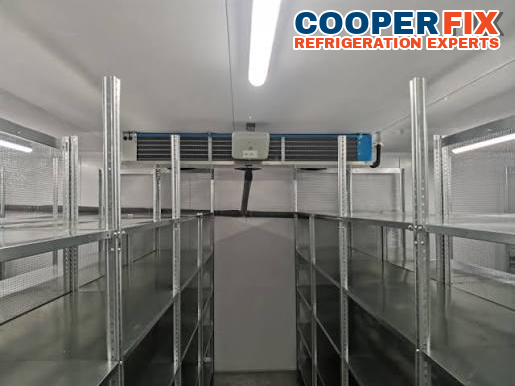
Evaporator and Air Movement
The evaporator transfers heat through the refrigeration cycle, while fans distribute air within the freezer. Defrost and control functions affect this equipment over time. CooperFix assesses the evaporator, fan operation and related sequence when the reported condition calls for it. Visible frost or uneven conditions help describe the problem but do not identify a failed part by themselves. The technician explains what the examination established and how the repair addresses it.
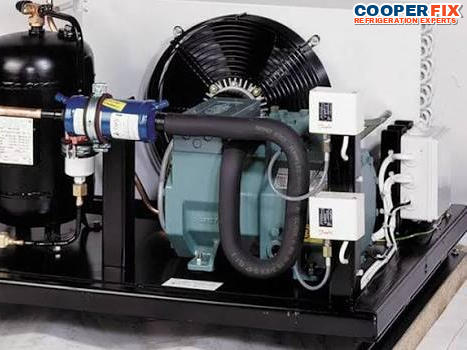
Condenser and Refrigerant Circuit
The condenser and circuit connect the major refrigeration components. A fault here can affect how the system performs under its intended load and may influence other equipment behaviour. CooperFix evaluates the circuit in relation to electrical and control conditions, then recommends work tied to the confirmed fault. This system view matters when an operational complaint could otherwise be mistaken for a single-component diagnosis.
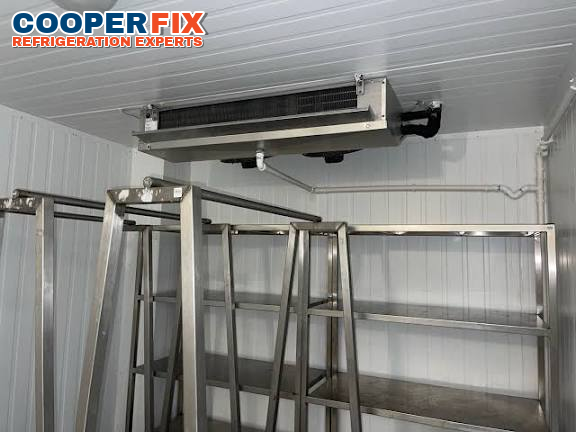
Controls and Defrost Functions
Sensors, controllers and defrost equipment help coordinate the refrigeration sequence. A displayed alert may direct attention to a concern without stating its root cause. CooperFix tests the relevant functions, determines whether a control, electrical or defrost repair is needed and explains the effect on system operation. The site team can report the interruption in ordinary language; interpreting the control sequence is the technician’s job.
CooperFix at Work: Clear Findings Before Work Proceeds
A professional service visit connects the reported interruption to the specific refrigeration installation. CooperFix identifies the equipment, tests relevant functions, explains the confirmed fault and discusses the next technical step with the authorized contact. After approved work, the service account distinguishes what was repaired, what was assessed and what may still require attention. This gives a York business a practical basis for coordinating operations without treating a general symptom as a final diagnosis.
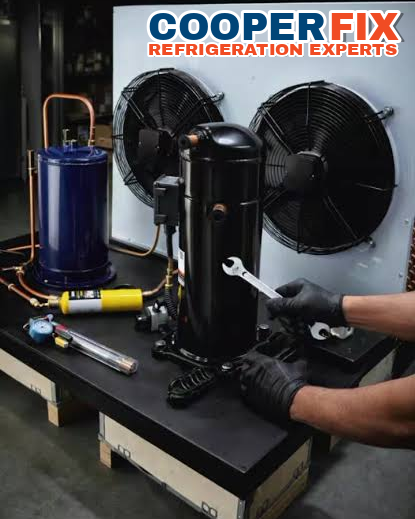
Equipment-specific findings
The technician connects the observed condition to the installed refrigeration system.
York Walk-In Freezer Refrigeration Services
The repair recommendation follows the confirmed equipment fault.
System Diagnosis for Uncertain Performance
A walk-in freezer may run irregularly, display an alert or fail to maintain its intended condition. These are service reasons, not complete repair instructions. CooperFix assesses how the installed circuit, electrical functions and controls operate together, then explains the fault supported by findings. The repair discussion should name the affected function and why the proposed work fits it. A business gains a technical account of its own system rather than a list of possible problems to check itself.
Compressor, Electrical and Control Repairs
The compressor relies on controls and electrical components to operate in the intended sequence. If a system stops or behaves inconsistently, CooperFix investigates these relationships and addresses the confirmed fault. Work may involve a control device, connection, electrical component or refrigeration equipment, depending on the assessment. The technician explains the proposed scope before authorized work. Staff are not required to test electrical parts as a condition of contacting CooperFix.
Circuit, Evaporator and Defrost Repairs
Refrigerant flow and defrost operation can create symptoms in more than one part of a walk-in installation. CooperFix assesses the circuit, evaporator functions and relevant controls to determine what repair is supported. A visible pattern near the evaporator should be interpreted in light of the entire system. The technician can explain which component or sequence is faulty, what work addresses it and any limitation on assessing longer-cycle performance during the visit.
Refrigeration-System Installation and Commissioning
A York business may need new or replacement refrigeration equipment for a walk-in freezer. CooperFix can discuss the installation scope based on the intended application and real site conditions. The work includes relevant equipment connections and controls, followed by commissioning checks of the installed refrigeration system. A project-specific assessment determines what is required before handover. This service is distinct from diagnosing one repair fault, even when both concern the same storage operation.
Business Context for a York Walk-In Freezer Request
The equipment role and property access shape the service request.
A Food Business Managing Deliveries
The request should name the equipment and explain which daily activity it supports.
Retail Back-Stock and Replenishment
Staff can report the observed change without assigning a failed component.
Shared Sites With Multiple Contacts
The site contact should provide access instructions for the equipment and any remote components.
Planning a Refrigeration-System Change
The service record should keep findings and authorization tied to the unit assessed.
A Food Business Managing Deliveries
A walk-in freezer can be central to receiving and placing frozen stock. When its refrigeration system becomes unreliable, the business may have to reorganize deliveries and stock movement under its own procedures. CooperFix investigates the equipment and explains the repair path supported by findings. That technical account helps the manager distinguish an observed interruption from a confirmed fault while coordinating the operating response.
Retail Back-Stock and Replenishment
A York retailer may use a walk-in freezer for stock that later moves to a customer-facing area. A problem with the walk-in system can interrupt replenishment without establishing a fault in any display cabinet. CooperFix scopes service to the affected refrigeration installation and assesses other equipment only if included in the request. The manager receives findings specific to the walk-in system rather than a general statement about all frozen inventory at the site.
Shared Sites With Multiple Contacts
An operating business, facilities contact and property representative may each be involved in access or approval. The initial request can identify who coordinates the visit and who authorizes work. CooperFix investigates the walk-in freezer refrigeration system and communicates the findings in a way that separates observed condition, proposed repair and remaining dependencies. This supports a decision without relying on a relayed alarm description as proof of cause.
Planning a Refrigeration-System Change
Not every inquiry starts with a breakdown. A business may be planning to replace refrigeration equipment or bring a new walk-in freezer system into operation. CooperFix can discuss installation and commissioning within its refrigeration scope, based on the intended use and site assessment. The project conversation identifies what can be confirmed from available information and what requires evaluation of the actual installation. It does not assume one standard arrangement fits every York business.
A York walk-in can place its evaporator, controls and condensing equipment in different service areas. CooperFix confirms which components serve the reported room and evaluates their relevant functions. The proposal identifies the supported fault, recommended work and any access or parts dependency.
Room-scale frozen storage affects receiving and stock movement, while CooperFix’s technical service focuses on the refrigeration system. The operator reports the interruption and coordinates access; CooperFix assesses the system and explains the repair boundary. Installation and commissioning require their own defined authorization.
York Walk-In Freezer Refrigeration FAQ
These answers explain how to prepare equipment, symptom and access information without asking staff to diagnose the unit.
What part of a walk-in freezer does CooperFix service?
CooperFix services the refrigeration system that operates the walk-in freezer. Depending on the installed arrangement and findings, the work may address the condensing unit, evaporator, circuit, electrical supply, control devices, fans or defrost equipment. The technician evaluates the specific system before defining a repair. A symptom description is useful for requesting service but cannot establish a failed component alone.
Can you assess a system that still appears to run?
Yes. A running system can still have a fault that prevents it from serving the business as intended. CooperFix investigates the installed refrigeration equipment and explains what can be confirmed through assessment. The business can describe the operational interruption; site staff need not measure equipment or identify the responsible part before making contact.
Do you repair controls and defrost issues?
Controls and defrost are part of refrigeration-system service where they apply to the installation. CooperFix checks the relevant sequence and electrical components, identifies a fault supported by testing and explains the repair. A displayed code or visible change provides context but is not a complete diagnosis. Technical interpretation stays with the technician.
Can CooperFix install and commission a refrigeration system?
Yes. For a walk-in freezer project, CooperFix can scope refrigeration-equipment installation and commissioning. The appropriate system and work depend on the application and existing site conditions. Commissioning includes checks of relevant operating functions before handover. A project-specific assessment defines the technical scope rather than a general description of York businesses.
What information starts a York service request?
Provide the York site address, a contact who can coordinate access and approval, the type of walk-in freezer system and a brief account of the interruption or project. CooperFix may ask for additional site information when arranging service. Your staff do not need to open equipment or prepare a technical report to start the conversation.
How are emergency requests assessed?
Contact CooperFix with the site and business interruption. Emergency requests are assessed under the availability statement above. The service team can discuss the appropriate next step after receiving the request. The first contact is about the affected installation and its operational role; professional diagnosis follows at the equipment.
Will CooperFix explain what was found before repair?
The technician discusses the findings, proposed work and any limitation that affects the decision with an authorized contact. The business can consider that recommendation alongside its own operating needs. After approved work, CooperFix describes the repair and the relevant operating response observed. Warranty applicability can be discussed against the repair performed, without implying that untested conditions have been resolved.
What access details are useful when a York walk-in freezer has remote condensing equipment?
State where the walk-in room, evaporator, controls and condensing equipment are located, then name the person who can authorize access to each area. Include any roof, loading, key or shared-building arrangements that must be coordinated for the visit.
Arrange walk-in freezer refrigeration service in York
Describe the affected equipment, current condition, business address and access contact. If the issue is urgent, call (647) 483-3777 with these details.
Emergency calls are received and assessed 24/7. Availability and response depend on location, workload and the repair required.