
Commercial Refrigeration / Walk-In Freezer Installation
Walk-In Freezer Installation
Walk-in freezer refrigeration needs equipment selected for low-temperature operation. CooperFix focuses on the refrigeration system: matching the condensing unit and evaporator to the required duty, planning refrigerant piping and evaporator drainage, confirming controls and defrost requirements, and commissioning the installed equipment. The system is assessed against the target storage temperature, product loading and operating conditions.
Book Service Call 647-483-3777Have This Ready
- Room dimensions and target set point
- Product type and daily loading
- Where the condensing unit can sit
- Available power supply
- Evaporator drain route and required drain protection
Refrigeration for a Walk-In Freezer
The condensing unit, evaporator, refrigerant piping, controls and evaporator drain arrangement work together as a refrigeration system. Their selection and installation need to suit the required freezer duty. CooperFix commissions the refrigeration equipment and records the operating checks for handover.
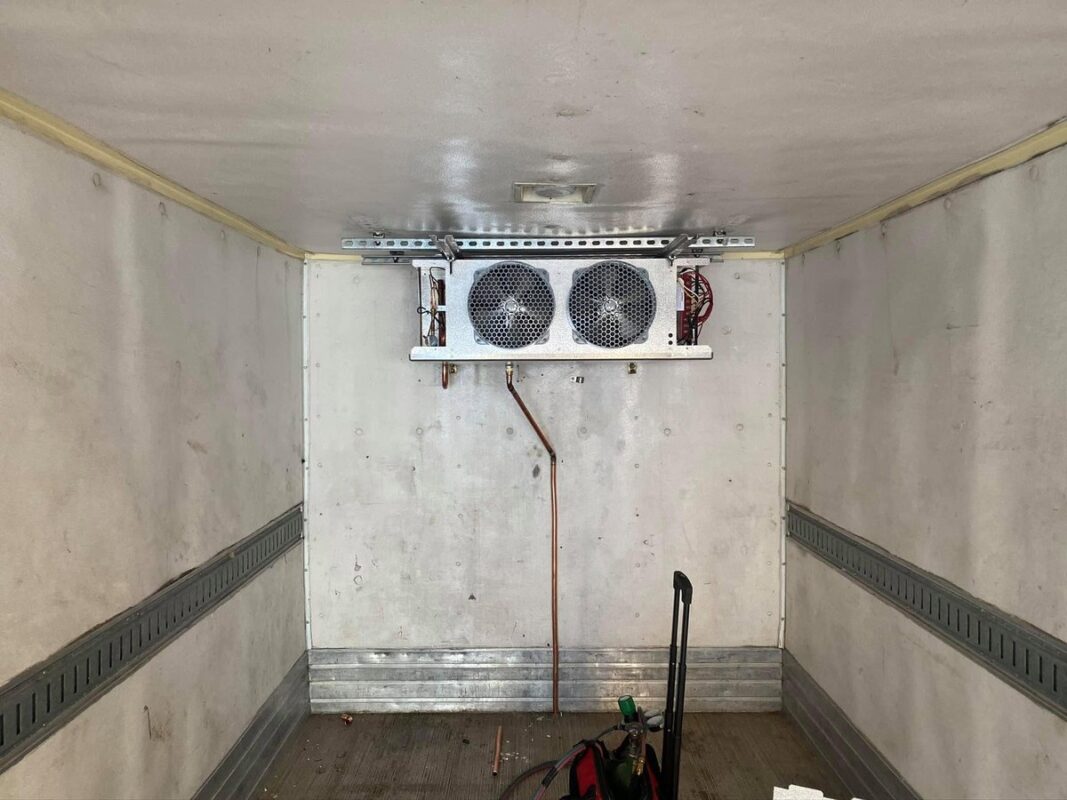
Walk-in freezer refrigeration installation.
Refrigeration down? Call us now.
Commercial refrigeration repair across Toronto and the GTA. Emergency calls are received and assessed around the clock.
- Walk-in coolers & freezers
- Reach-in fridges & freezers
- Display cases
- Beverage coolers
- Prep & sandwich tables
- Compressors, condensers, evaporators
- Digital controllers & sensors
- Defrost systems & electrical controls
- 24/7 Emergency Calls
- Mechanic 313A
- ODP/ODS Certified
- Toronto & GTA
Request Service
Tell us the equipment and the problem — we will get back to you.
What a Walk-In Freezer Installation Covers
System Selection
Refrigeration capacity is selected for the target storage temperature, room dimensions, product load and operating conditions. The condensing unit and evaporator must be suitable for the intended freezer duty.
Piping and Electrical
Suction and liquid lines are routed and insulated for low-temperature duty. Electrical is connected to code and the controller is wired for defrost and alarm.
Commissioning
The refrigeration system is commissioned under suitable operating conditions. Temperatures, relevant operating measurements and control settings are checked against the selected equipment requirements and recorded before handover.
Low Temperature Changes the Details
- Defrost settings must suit the selected equipment and operating conditions
- Evaporator drain protection is planned for sections exposed to freezing conditions
- Evaporator placement and service access must suit the refrigeration equipment
- Refrigerant piping and pipe insulation follow the selected equipment requirements
- Pull-down and recovery are measured during refrigeration commissioning
What You Get on Handover
A written record of the installed equipment, measured operating conditions, set point, defrost settings and any conditions found on site.
For a coordinated project, refrigeration installation is scheduled around equipment access, electrical readiness and the site conditions needed for commissioning. The sequence and any outstanding requirements are agreed before the refrigeration system is handed over.
Who This Is For
Restaurants, grocery and specialty retail, bakeries, butchers, caterers, commissaries, food production and institutional food service adding or replacing walk-in freezer refrigeration equipment in Toronto and the GTA.
What Low Temperature Changes in the Design
Five refrigeration details need to be established for walk-in freezer operation. They cover defrost, equipment selection, controls, evaporator drainage and performance in the expected ambient conditions.
- Defrost method and controls. The defrost method, timing and termination settings are confirmed for the selected equipment and operating conditions. The installed sequence is checked during commissioning.
- Refrigeration equipment selection. The condensing unit and evaporator are matched to the required low-temperature duty and the documented operating limits of the selected equipment.
- Temperature sensing and control. Sensor placement and refrigeration control functions are confirmed for the selected system. Relevant settings and observed operation are recorded for handover.
- Evaporator drain protection. The drain route and termination are planned for the installation. Protection against freezing is provided where required by the selected equipment and the conditions along the route.
- Operation in the expected ambient conditions. The condensing unit must be suitable for its location. Required low-ambient controls, where specified for the equipment, are checked as part of the refrigeration installation.
Site Conditions That Decide the Quote
The installation quote is based on the refrigeration equipment and the site conditions established before the work is planned.
- Required refrigeration duty: target storage temperature, room dimensions and product loading
- Where the condensing unit can go, the ambient it will see, and how lines are routed
- Electrical supply for the selected condensing unit, evaporator and defrost equipment: voltage, phase, capacity and connection points
- Evaporator drain route, termination and protection against freezing where required
- Access and installation positions for the condensing unit and evaporator
- Clearances required for evaporator operation and refrigeration maintenance
- What has to keep running during the work, and how product will be handled meanwhile
Commissioning a Freezer, and What Gets Recorded
A freezer that reaches -18°C on the day is not proof of anything. What matters is whether it holds through a full defrost cycle with a real load, and whether that was measured.
- Pressure test and evacuation before charging, with the evacuation held and verified rather than timed.
- Charge weighed in against the nameplate.
- Superheat and subcooling set and recorded at low-temperature operating conditions.
- Defrost schedule set for the real moisture load, then a full cycle run and the termination point recorded.
- Coil inspected after that defrost cycle to confirm it actually cleared.
- Installed refrigeration controls and any specified alarms checked against the equipment documentation.
- Evaporator drainage and any required drain protection checked for the installed arrangement.
- Pull-down from ambient recorded, and the recovery time after a door-open period recorded separately.
- Handover with all readings, settings, model and serial numbers written down as the baseline for future service.
Frequently Asked Questions
What electrical supply does the freezer refrigeration system need?
The supply must suit the specified condensing unit, evaporator and defrost equipment. Voltage, phase, circuit requirements and connection points are confirmed from the equipment documentation before installation.
Can existing refrigeration equipment be used for freezer duty?
That depends on the equipment. The condensing unit, evaporator, refrigerant piping, defrost, controls, evaporator drainage and electrical supply must be assessed for the intended low-temperature operation. A colder temperature setting alone does not establish that the system is suitable.
How long does installation take?
Timing depends on the specified refrigeration equipment, its availability, equipment access, electrical readiness and commissioning requirements. The schedule is established after these conditions have been checked.
Do you service what you install?
Yes, and the commissioning readings become the baseline for every later visit.
Request a Walk-In Freezer Installation Quote
Tell us the room size, the set point you need, where the condensing unit can go and your timeline.
Planning Walk-In Freezer Refrigeration?
Send the room dimensions and the set point and we will tell you what the system needs to be.