
Commercial refrigeration repair in East Gwillimbury
CooperFix provides commercial refrigeration repair in East Gwillimbury for refrigerated storage, large display installations, commercial freezers and the refrigeration systems serving walk-in rooms. A service request begins with the equipment that needs attention and the change staff have noticed. You do not need to identify a failed component before arranging an assessment.
Provide the service address and explain where the affected equipment is located within the property. The technician examines the installed system, takes the relevant measurements and explains the findings. Work is proposed for the condition established on that equipment, with access, components and any further visit requirements discussed as part of the scope.

Report the affected commercial refrigeration system clearly
Give CooperFix the East Gwillimbury service address, affected equipment, observed change and contact who can provide access.
- Displayed temperature, controller message, frost, water, sound and run-time change, with the time observed
- Equipment label, make and model when safely visible
- Directions to the evaporator, condensing equipment, controls and electrical disconnect and the authorized access contact
Request commercial refrigeration service in East Gwillimbury
Staff should leave closed components closed. Include a phone number and email address for service coordination.
Connect the service address to the correct equipment
An address identifies the destination, but it may not identify the entrance, room or refrigeration system. When requesting service in East Gwillimbury, describe those separately. This is particularly useful when the person admitting the technician is not the person who first noticed the equipment problem.
Describe the affected installation
Name the refrigerator, freezer, display or room and explain the change in ordinary terms. Include an existing equipment label when available. Say whether the equipment has stopped, is running differently or is no longer maintaining its usual conditions, without choosing a replacement part in advance.
Identify the arrival and access contact
Give the operating address, the appropriate entrance and a contact number. Explain any relevant route from the entrance to the equipment. If connected components occupy another area, identify that location when known and say who can provide authorized access during the visit.
Review the findings and agreed work
The technician explains what the assessment establishes and which work those findings support. Keep completed work separate from outstanding requirements. If a component, additional investigation or later visit is needed, confirm who will coordinate the next action and retain the equipment reference with that information.
Find the East Gwillimbury service page for your equipment
At an East Gwillimbury address, select the page for the unit actually affected. Chilled cabinets and displays belong with fridge repair, freezer cabinets with freezer repair, and room refrigeration with walk-in freezer repair.
 Glass-door refrigeration for commercial meat display.chilled commercial equipmentCommercial fridge repair in East Gwillimburyreach-in refrigerator, preparation table, undercounter fridge, beverage cooler or display case.
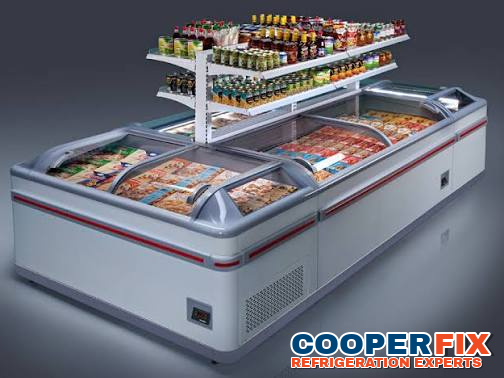 Island freezer display case used for commercial frozen-food storage.frozen-storage equipmentCommercial freezer repair in East Gwillimburyreach-in freezer, undercounter freezer, frozen display case or low-temperature storage cabinet.
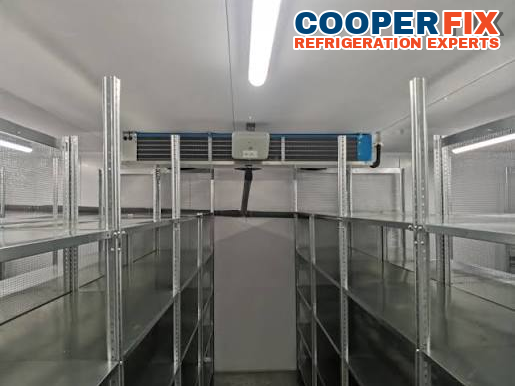 Ceiling evaporator serving a commercial walk-in cold room.walk-in freezer equipmentWalk-in freezer repair in East Gwillimburyevaporator, condensing unit, controls, defrost components, drain and refrigeration lines serving the freezer room.
Refrigerated installations and the systems serving them
The visible storage or display area is one part of the refrigeration installation. Equipment identification also considers the evaporator, condensing arrangement and controls. Tell CooperFix which area has changed; the technician establishes the relevant connections rather than relying on the appearance of the nearest component.
Large refrigerated storage and display installations
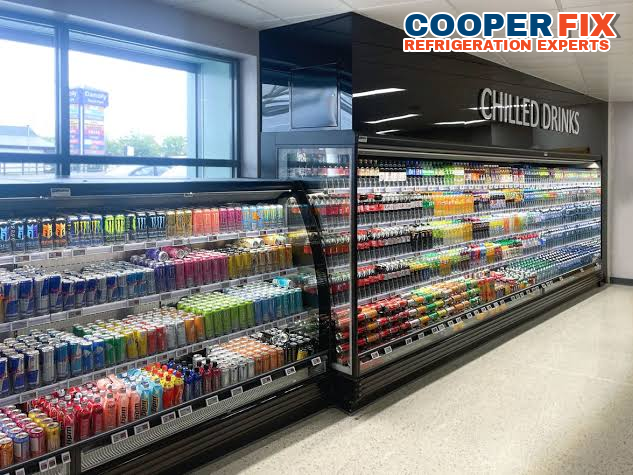
A glass-front refrigerated installation can present a complaint at one section while the rest appears normal. Identify the affected position and its ordinary use. CooperFix checks the refrigeration serving that area, relates the measured conditions to the installed arrangement and explains what the findings support.

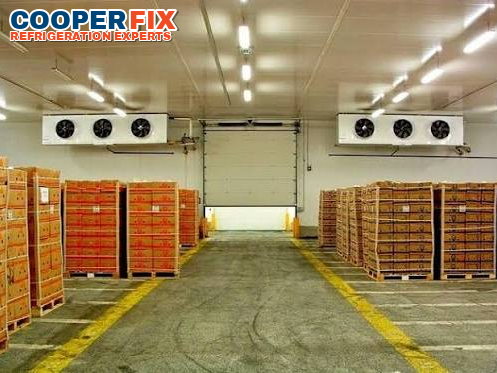
Evaporators serving a cold room
The evaporator and its fans distribute cooled air through the room. Report a change in airflow, sound or visible frost from an ordinary accessible position. The technician checks the actual equipment and application, considering the connected refrigeration system rather than diagnosing a fan or other part from one observation.
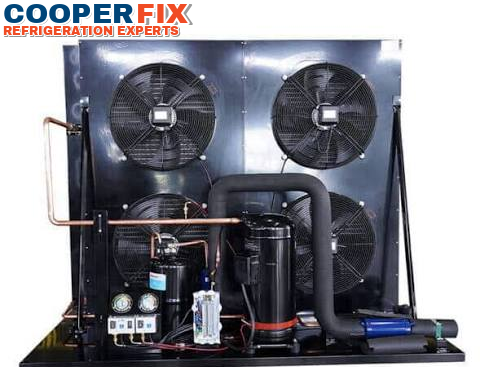
Condensing equipment in a separate location
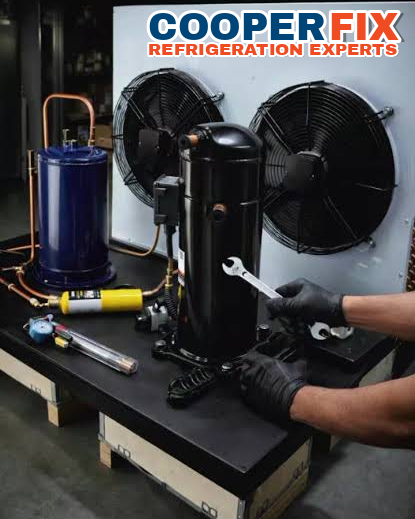
A condensing unit may be reached by a different route from the refrigerated area. Tell CooperFix where it is, if known, and identify any access arrangement. The technician confirms which equipment the unit serves before connecting its electrical and refrigeration findings to the original complaint.
Long beverage refrigeration displays
For a multi-section beverage installation, describe the position of the change and whether neighbouring sections behave similarly. Include when the difference becomes noticeable during normal use. Staff can report those observations without opening equipment or deciding whether the cause is local to one section or shared.
CooperFix at work: reach the whole refrigeration installation
During an East Gwillimbury service visit, access planning and technical assessment meet at the actual equipment. The technician identifies the affected installation, reviews the reported change and determines which connected components need examination. Reaching the storage area is not always the same as reaching everything required for the assessment.
The investigation can involve temperatures, airflow, fans, controls, defrost, electrical operation and the refrigerant circuit, as appropriate to the design. Findings from those checks are considered together. CooperFix explains the supported cause and proposed work before a component is ordered, while identifying any point that still needs investigation.
Explain a limitation before trying to overcome it
If the equipment reference is behind a cover or a component is in a restricted area, describe the limitation. Staff should leave protected assemblies closed and avoid moving fixed equipment. A request can begin with the visible installation and a contact who can arrange access; it does not depend on staff carrying out technical checks.
Separate the current fault from the next service requirement
A business may need a repair now, maintenance for another unit or planning for a replacement. These can be discussed together without treating them as the same task. CooperFix defines each scope against the identified equipment, its intended application and the condition established during assessment.
Repair a measured refrigeration fault
The proposed repair follows the confirmed findings on the affected installation. Relevant work can involve fans, sensors, controls, defrost or electrical components and the refrigeration circuit. The technician explains the relationship between the fault and the work, and records what was completed and checked rather than describing every outstanding concern as resolved.
Plan maintenance for identified equipment
Maintenance is arranged around the actual refrigeration installation and its service history. Tell CooperFix which units are included and describe recurring changes even if they have not stopped operation. An active complaint should remain visible in the request so it receives assessment rather than being absorbed into a general maintenance description.
Evaluate component and system replacement
Replacement planning considers the established condition, component information, previous work and the function the equipment must serve. Replacing one component is different from replacing the refrigeration installation. Explain any intended change in use so the proposal addresses the required application, with the scope and access arrangements made clear before work proceeds.
Install and commission refrigeration equipment
Installation and commissioning concern the refrigeration system and its operating requirements. The equipment arrangement, connections, controls and access need to be established for the proposed work. The handover records the installation completed, the relevant operating checks and any remaining action rather than relying only on the presence of newly fitted equipment.
An address, an entrance and an equipment location are different details
An address, an entrance and an equipment location are different details
Give the full East Gwillimbury operating address, then describe the appropriate arrival point. An entrance used by customers, staff or deliveries may lead to different parts of a property. State the route that actually applies to the service visit rather than assuming the business name identifies the correct way in.
An address, an entrance and an equipment location are different details: operating context
Within the property, identify the room, department or equipment label associated with the complaint. Mention connected components elsewhere only when their location is known. Clear directions help coordinate access; they are not a substitute for the technician confirming the refrigeration arrangement when examining the installation.
Keep the observed time separate from the assumed start of a fault
A problem noticed at the start of a working period may have begun earlier, but the exact time may be unknown. Record the last normal observation and the first abnormal one. If there is an existing temperature or alarm record, retain it rather than estimating an overnight sequence from the latest display.
Keep the observed time separate from the assumed start of a fault: operating context
Tell CooperFix whether staff were present during the interval and whether anything was reset or adjusted afterward. The technician can compare the available history with current measurements. An honest gap in the record is more useful than a detailed sequence that nobody actually observed.
Keep each reported installation identifiable
Several refrigerators, freezers or rooms at an East Gwillimbury address may need attention. Identify each by its location or existing label and describe its own change. A warmer display and a freezer that stopped remain separate complaints even when the same person reports them during one call.
State when each change was noticed, which equipment still operates normally and whether the events appeared together. Those details describe the extent of the interruption without proving a shared cause. CooperFix confirms the actual connections and conditions before applying a finding from one unit to another.
Describe the business effect and any apparent recovery
Tell CooperFix which affected unit is central to current chilled or frozen storage and whether another suitable arrangement is available. If operation appears to recover, report what changed, when it happened and any adjustment already made. Keep the original complaint in the account.
The business continues its own product-handling and monitoring procedures. A normal reading at one moment does not explain an earlier interruption. The technician assesses the equipment while the site contact provides the observed timeline and the practical effect of the change. If a business in Sharon uses a commercial refrigerator throughout a service period, an interruption can affect its access to chilled stock.
Arrange entry to remote components at the property
Give the complete operating address, entrance, affected equipment location and contact who can admit the technician. If a condensing unit or controller is in a separate area, provide the known location and person authorized to arrange entry. The correct entrance and the equipment’s position may be different details. Include a building or suite reference when it helps the technician find the actual refrigerated installation.
Explain any restriction before attendance. Staff should not enter protected areas, remove guards or take electrical measurements to complete the request. If a relevant area cannot be reached during the proposed visit, make the limitation clear so CooperFix can assess the access requirement.
Leave the next contact a usable service history
Keep the equipment identity, confirmed finding and work completed in one record. A component still to be obtained, further checks or a return visit must remain visibly outstanding. Name the person coordinating the next step so another member of staff can understand the current position.
If the unit changes again, add the date, observation and period of operation after service. Do not convert a familiar symptom into an assumption that the same part has failed. Continuing equipment records support a later assessment, while product-handling decisions remain with the responsible business personnel.
East Gwillimbury refrigeration service information
The details below help arrange a visit and keep equipment information clear. Technical findings and the work required are established from the installed refrigeration system, not from a booking description alone.
Which address should we provide when an office arranges the visit?
Provide the address where the refrigeration equipment operates, along with the appropriate entrance and an on-site contact. If authorization comes from a different office, identify that contact separately. This keeps the arrival arrangements connected to the actual equipment location.
What if we do not know when the refrigeration problem started?
Give the last normal observation and the first time the change was noticed. Say which period is unknown and retain any existing readings or alarm records. Staff do not need to reconstruct an unobserved sequence before contacting CooperFix.
Can we request work on several units at one property?
Yes. Identify each affected unit and describe its own condition, location and timing. Explain whether the changes appeared together. CooperFix assesses the actual installations before applying a finding from one unit to another.
Do we need to reach a remote condensing unit ourselves?
No technical inspection by staff is needed. Tell CooperFix where the unit is located when known and who can arrange authorized access. Leave restricted areas and protected components to the appropriate personnel during the service visit.
Should we still mention a problem that has temporarily cleared?
Yes. Explain the earlier condition, when operation appeared normal again and any reset or adjustment already made. Retain both parts of the history. An intermittent change can require assessment even when the original symptom is absent at a later moment.
Can planned maintenance and an active fault be discussed together?
Yes, but identify them separately. State which equipment has a current problem and which units are being considered for maintenance. The technician can then distinguish fault investigation from the planned review of other equipment.
How do we request urgent service in East Gwillimbury?
Call (647) 483-3777 with the operating address, affected equipment and current condition. Explain the effect on the business and identify the contact for access. CooperFix assesses the request and discusses the next available action.
Arrange refrigeration service in East Gwillimbury
Call CooperFix with the East Gwillimbury service address, affected unit and contact who can provide access.
Emergency calls are received and assessed 24/7. Availability and response depend on location, workload and the repair required.
Send the East Gwillimbury service details
Give directions from the site entrance to the equipment and identify who can open restricted areas.