
Commercial refrigeration repair in King City
CooperFix provides commercial refrigeration repair in King City for businesses using refrigerated storage, large displays, commercial freezers and walk-in refrigeration. A request can concern one interrupted unit or several installations needing different work. Identify what is affected now, what continues to operate and which equipment is being considered for planned attention.
The technician assesses the installed refrigeration system and explains the findings before recommending work. An urgent fault, a maintenance visit and a replacement project need distinct scopes, even when they share an address. CooperFix keeps those needs connected to the correct equipment so the business can understand what has been established and what remains to be arranged.

Report the affected commercial refrigeration system clearly
Give CooperFix the King City service address, affected equipment, observed change and contact who can provide access.
- Equipment label, make and model when safely visible
- Directions to the evaporator, condensing equipment, controls and electrical disconnect and the authorized access contact
- Displayed temperature, controller message, frost, water, sound and run-time change, with the time observed
Request commercial refrigeration service in King City
Do not move fixed equipment to obtain more detail. Include a phone number and email address for service coordination.
Separate today’s interruption from planned refrigeration work
Start with the condition that prompted contact. Then identify any other equipment or planned work the business wants to discuss. For service in King City, provide the operating address and a contact who can locate the installations. A clear initial scope helps keep one urgent complaint from obscuring unrelated maintenance or replacement needs.
Identify the equipment needing attention now
Describe the affected refrigerator, freezer, display or room and its present operation. Say whether it has stopped, is maintaining different conditions or has developed a recurring change. Give an existing equipment reference if available, but do not delay contact while trying to diagnose a component.
List other work as separate requests
Name additional units requiring attention and distinguish active faults from planned maintenance. For a proposed replacement, explain the intended use and whether the existing equipment is still operating. This allows the discussion to cover several needs without assuming that one technical finding applies to them all.
Review the findings for each installation
CooperFix explains the condition established, work proposed and any component or further investigation required. The business can review a defined scope for each unit. Keep the equipment reference with completed actions and outstanding requirements so the service account remains understandable after the visit.
Find the King City service page for your equipment
A King City service request may concern present repair or a separate future replacement. Choose fridge repair for chilled cabinets, freezer repair for frozen-storage units, and walk-in freezer repair for refrigeration serving the room.
 Stainless reach-in refrigeration equipment for commercial storage.chilled commercial equipmentCommercial fridge repair in King Cityreach-in refrigerator, preparation table, undercounter fridge, beverage cooler or display case.
 Glass-door freezer display for commercial frozen storage.frozen-storage equipmentCommercial freezer repair in King Cityreach-in freezer, undercounter freezer, frozen display case or low-temperature storage cabinet.
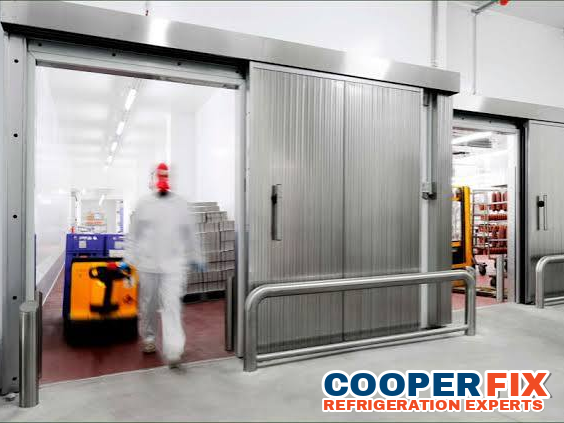 Walk-in cold-storage rooms within a commercial refrigeration installation.walk-in freezer equipmentWalk-in freezer repair in King Cityevaporator, condensing unit, controls, defrost components, drain and refrigeration lines serving the freezer room.
Identify the refrigeration arrangement behind the business need
The same request may include equipment with different functions and configurations. A display, cold room and separate condensing unit should be linked to their actual installations rather than grouped by appearance. The technician confirms how the refrigeration is arranged and which equipment belongs to the reported complaint.
Large refrigerated food displays
For a long display, identify the affected section and whether the concern extends to adjacent areas. Describe the normal display function and any change staff have noticed. CooperFix assesses the refrigeration serving that installation, keeping a local observation separate from an assumption that the entire display needs identical work.

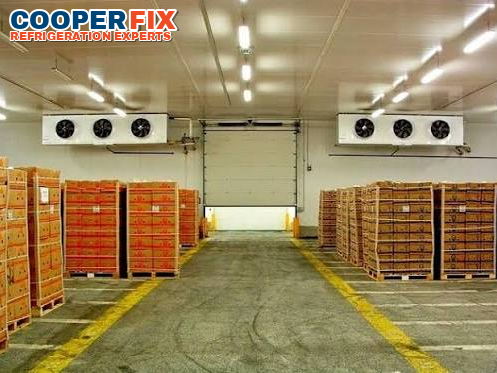
Cold-room evaporator equipment
A room complaint can involve the installed evaporator, its fans, controls and connected refrigeration system. Give the room reference and describe the visible or audible change from a normal accessible position. The technician establishes the operating application and checks the relevant functions before explaining which work is supported.
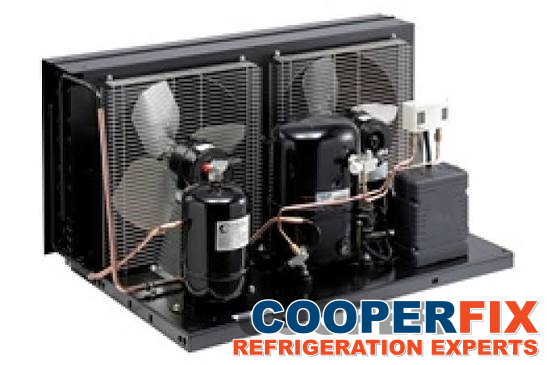
Remote condensing units
Where condensing equipment is separate from the refrigerated area, include its known location and access requirements. CooperFix confirms the equipment connection rather than assuming that the nearest unit serves the affected space. Relevant electrical and refrigeration findings are then related to the complaint on that installation.
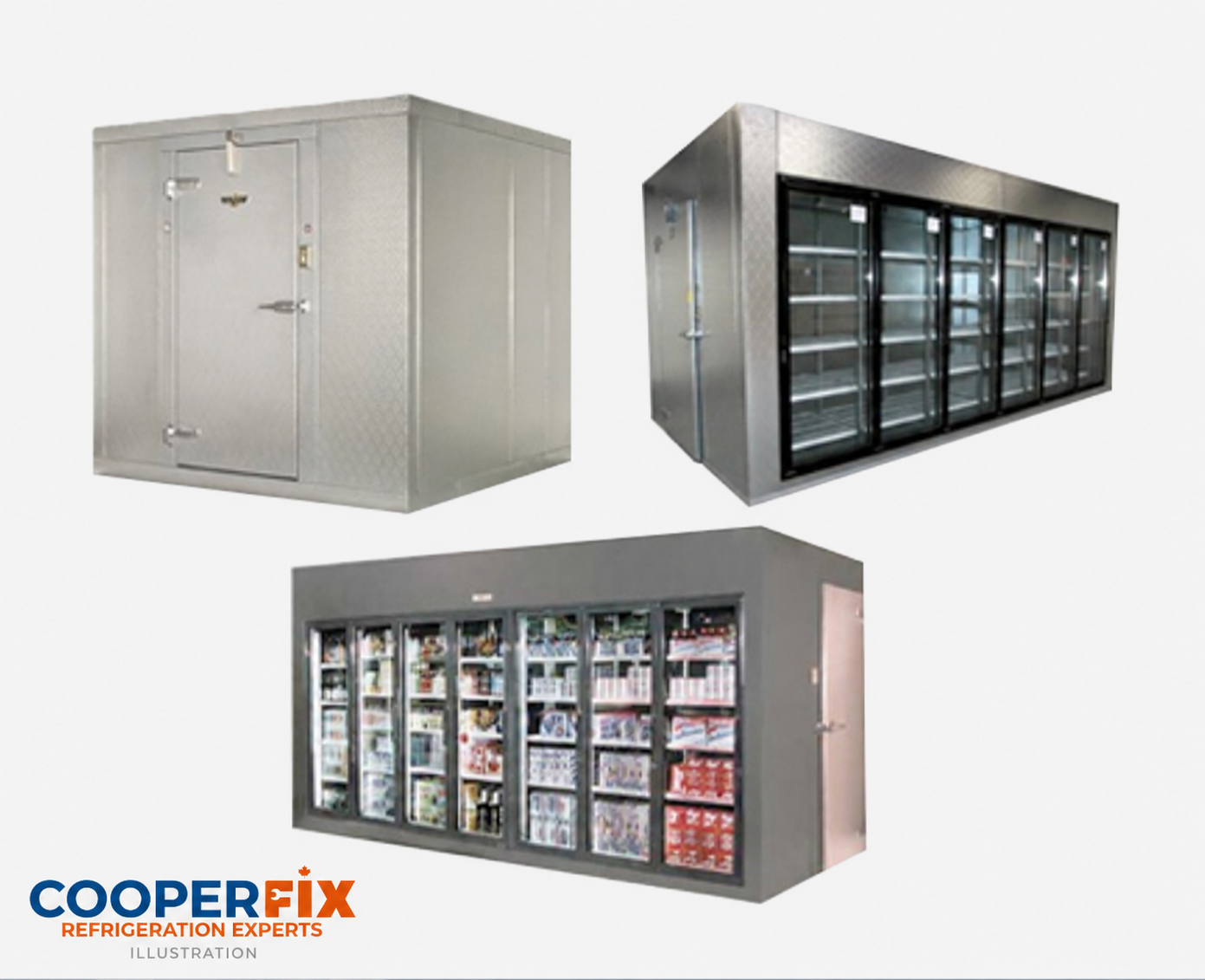
Large glass-front storage installations
A large refrigerated installation can support storage and display functions that need to be described accurately during booking. Explain which area is affected and how it is normally used. The assessment considers the installed refrigeration arrangement, not simply the size of the structure or a similarity to equipment elsewhere.
CooperFix at work: establish the repair scope before extending it
A King City visit may begin with one reported interruption while staff also want other equipment reviewed. The technician first confirms the requested installations and their current conditions. Identifying those boundaries matters: a finding on a stopped freezer does not automatically describe a running display or the refrigeration serving another room.
The assessment uses the relevant measurements and functional checks for each system. These can concern temperature response, airflow, controls, defrost, electrical components and the refrigerant circuit. CooperFix explains what the findings establish, the work they support and any limitation, so an additional concern is not silently included in a repair that addressed something else.
The person showing the technician the equipment should know which installations are included. If someone else approves work, provide a practical way to contact that person. Existing records can be made available without staff opening protected machinery, attaching instruments or carrying out technical checks before the visit.
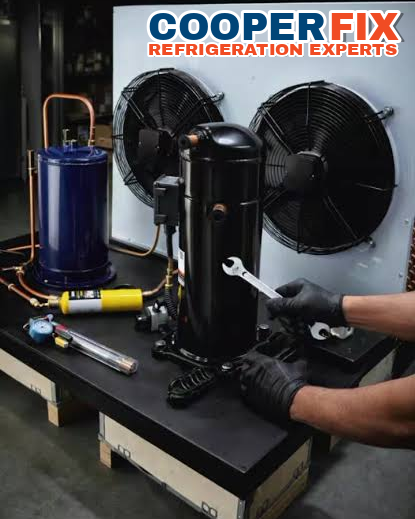
Keep the attending contact and approving contact connected
Name the person who can lead the technician to the unit, controls and remote equipment. Point out known controls, disconnects and remote components without opening protected equipment.
Choose a defined scope for each refrigeration need
CooperFix can discuss a current fault alongside longer-term work, but the explanation should identify what each proposal concerns. A repair, maintenance review and replacement assessment do not become interchangeable because the equipment shares a property. The scope follows the condition and requirements of the actual installation.
Investigate and repair the current fault
Repair work follows findings on the equipment named in the request. It may concern relevant controls, fans, sensors, defrost or electrical components and the refrigeration circuit. CooperFix explains why the proposed work relates to the complaint and records the checks made afterward, with any unresolved condition kept separate from the completed repair.
Arrange planned maintenance for operating equipment
Maintenance can be discussed for equipment that remains in service. Identify which units should be included, their usual operation and any recurring concerns. The technician considers the installed arrangements and available history. If a current fault is discovered or already known, it should receive its own clear description rather than being lost within the maintenance request.
Assess replacement without assuming every unit needs it
A replacement discussion considers equipment condition, intended application and relevant service history. Several units of a similar age may still present different findings and requirements. CooperFix distinguishes a component replacement from a complete refrigeration-system replacement and explains the information needed to define the proposed work for each installation.
Plan installation and commissioning
A refrigeration installation requires the intended function, equipment arrangement and connected requirements to be established. Coordinate the work with the site contact responsible for access and operation. The handover should describe what was installed and checked, including any outstanding action, so a new installation is recorded separately from unrelated work elsewhere at the address.
One property can have several different service needs
One property can have several different service needs
A business might request attention to a stopped unit, a recurring alarm on another system and maintenance for equipment that appears normal. Keep these as separate entries when contacting CooperFix. A location, equipment label and short description are enough to distinguish them; a technical diagnosis is not required for the initial list.
One property can have several different service needs: operating context
Explain which interruption currently affects the operation most. That information describes the business’s priorities without assigning a common cause or promising an attendance sequence. The technician can establish the condition of the identified equipment and make clear which part of the request each finding addresses.
Do not hide an active problem inside a maintenance booking
If a maintenance visit is being discussed and a refrigerator starts behaving differently, update the request with the new condition. Name the equipment, the change and when it was noticed. An active temperature complaint or interruption needs to be visible before attendance rather than presented as a routine observation after the planned scope is already understood.
Do not hide an active problem inside a maintenance booking: operating context
The technician can then separate fault assessment from the intended maintenance work. This does not establish that every changed reading is a fault or that all work can be completed together. It gives the service discussion an accurate description of what the business now needs.
Separate the present fault from a replacement enquiry
Identify the King City equipment that needs attention now and describe whether it is operating, unreliable or stopped. Give its location, existing label and the observed change. If the business is also considering replacement, explain the proposed future storage or display function as a separate requirement.
Provide earlier service records when available, but do not treat a former component choice as the answer to the current complaint. CooperFix assesses the installed equipment and present condition before defining repair work. A future arrangement requires its own equipment and operating requirements.
Explain the immediate effect of the refrigeration interruption
Tell CooperFix which part of chilled or frozen storage is affected and whether another suitable unit remains available. Water near an evaporator, a temperature change and an alarm should be described as separate observations with their locations and times. A visible condition is not a diagnosis of the refrigeration circuit.
The business follows its own product-handling procedures. CooperFix examines relevant refrigeration and drainage arrangements and explains the work supported by its findings. The site contact can describe the practical effect without selecting a replacement component or predicting the repair outcome.
Identify every unit and area included in the visit
Give the operating address, affected equipment location and contact who can admit the technician. If connected condensing equipment is in another area, provide its known location and access arrangements. A nearby unit should not be assumed to belong to the reported system.
If another installation also needs attention, notify CooperFix and describe it separately before the visit. Staff should not open guards or enter restricted areas to prove connections. The service record should later distinguish equipment actually examined from additional work only discussed.
Record component decisions against the confirmed application
Retain the equipment identity, confirmed finding, completed work and any outstanding action after assessment. If a replacement component is proposed, the technician confirms its requirements for the installed refrigeration arrangement. An expansion valve cannot be selected from appearance or connection size alone.
Keep a proposed future replacement separate from a repair already completed. Record any further part selection, investigation or return visit as pending. An earlier service record can help identify the system, but it does not prove the cause of a new operating change.
King City refrigeration service information
These answers explain how to arrange a request that may involve different equipment and work scopes. The technician establishes technical findings on the installed systems; the business supplies the equipment locations, operating observations and responsible contacts.
Can one request include a fault and planned maintenance?
Yes. Identify the equipment with the current problem separately from units being considered for maintenance. Describe the condition of each installation. CooperFix can then discuss distinct scopes without treating a maintenance booking as proof that the active complaint has already been assessed.
What should we send for several affected units?
Give each unit a recognizable location or existing label, then add its current condition and when the change was noticed. Explain which interruption most affects the business. Staff do not need to identify replacement components before arranging service.
Should operating equipment be included in a replacement enquiry?
Yes. State how it is currently operating and explain the intended future use. Retain the distinction between assessing a present fault and considering replacement. The technician uses the actual installation and requirements to define the relevant proposal.
What should we report when water appears near an evaporator?
Describe the location, timing and any accompanying operating change. Leave pans, covers and connected lines undisturbed. CooperFix examines the relevant condensate drainage and refrigeration functions to establish the source; visible water alone does not identify a failed refrigeration component.
Can we add another unit after arranging the visit?
Tell CooperFix about the additional equipment, its location and the reported change. Its inclusion needs to be discussed rather than assumed. The assessment and service record should identify which units were actually examined and what work belongs to each one.
Does similar equipment always need the same repair?
No. Similar appearance or age does not establish the same fault. CooperFix assesses each installation and its operating history. A finding on one system is applied to another only when the technical evidence supports that connection.
How do we request urgent commercial refrigeration service in King City?
Call (647) 483-3777 with the operating address, affected equipment and its current condition. Explain the interruption to the business and identify the access contact. CooperFix assesses the request and discusses the next available action.
Arrange commercial refrigeration service in King City
Call CooperFix with the King City service address, affected unit and contact who can provide access.
Emergency calls are received and assessed 24/7. Availability and response depend on location, workload and the repair required.
Send the King City service details
Name the person who can lead the technician to the unit, controls and remote equipment.